Idea Statica
  • Steel
  • Concrete
  • Support & Learning
  • Pricing
  • Company
  • Steel overview
  • Connection design
  • Member design
  • Parametric design
  • Steel case studies
  • Concrete overview
  • Walls and D-regions
  • Anchoring design
  • Concrete case studies
  • BIM Overview
  • Supported integrations
  • Checkbot
  • Viewer
  • APIs
  • Support Center
  • E-learning & certification
  • Blog
  • Downloads & Licensing
  • Plans
  • Free community tool
  • Enterprise customers
  • Students & educators
  • How much will you save?
  • About us
  • Contact
  • Research & development
  • Authorized resellers
  • Meet our customers
  • Career
  • Steel
    Steel overviewConnection designMember designParametric designSteel case studies
  • Concrete
    Concrete overviewWalls and D-regionsAnchoring designConcrete case studies
  • BIM OverviewSupported integrationsCheckbotViewerAPIs
  • Support & Learning
    Support CenterE-learning & certificationBlogDownloads & Licensing
  • Pricing
    PlansFree community toolEnterprise customersStudents & educatorsHow much will you save?
  • Company
    About usContactResearch & developmentAuthorized resellersMeet our customersCareer
14-Day Trial
14-Day Trial

Subscribe to our newsletter

Company

  • About us
  • Partners
  • Careers
  • Patent

Resources

  • Customer projects
  • Case studies
  • Connection Library
  • Verification books

Legal

  • EULA
  • Privacy policy
  • California Privacy
  • TOS Viewer
  • Licensing

Help

  • Contact
  • Quote request
  • Resellers
  • Downloads
FacebookInstagramLinkedInYouTube

ยฉ IDEA StatiCa 2009-2026

Trusted and used worldwide by engineers, fabricators & consultants.

Support CenterKnowledge Base ArticlesThin-walled (cold-formed) members
Advanced analysis types for your steel structures
Nonconformity in connection analysis results
Connection analysis 0% or doesn't reach 100%
What is the singularity warning?
Stop at limit strain
Torsion moments and warping
Warping of members โ€“ Load in shear center
Thin-walled (cold-formed) members
Load effects displayed in the scene
Thin-walled (cold-formed) members
For thin-walled members, only geometrically nonlinear analysis with imperfections is suitable. Structural design of steel members in structural engineering software.
SteelKnowledge baseConnectionCross-sectionsGMNA

Thin-walled (cold-formed) members

This article is also available in
ENCZDEESFRITPTNLHUROKRPLTHTRVIZH

The attitude to thin-walled sections ought to be different than to sections of class 1, 2, 3. The materially and geometrically non-linear analysis with imperfections must be performed to receive correct results.

IDEA StatiCa Connection software is primarily dedicated to the assessment of connections of hot-rolled members which are not significantly affected by buckling. The geometrically linear and materially non-linear analysis is performed because of its fast and stable calculation. However, this type of analysis does not take into account the loss of stability. If you need to investigate the stability behavior, performing of a linear buckling analysis can help you detect dangerous areas and provide the factor for Eulerโ€™s bifurcation point.

If you still want to use IDEA StatiCa Connection to check the connection of thin-walled (cold-formed) members and if you are experienced user of the software you have to be careful and use the engineering judgment, then you should:

  • Perform linear buckling analysis and carefully evaluate each buckling shape; the first 5 presented buckling shapes might not be enough.
  • Do not rely on the plasticity of thin-walled members and instead limit the von Mises stress to yield strength or even lower. (However, do not limit plastic strain to zero โ€“ singularities would be dominant. Also, localized plastic strain, e.g. near bolt holes may be fine)
  • Be aware that local buckling, which is not taken into account, can redistribute internal forces in components differently.
  • Be aware that stiffness of components may be different due to different failure modes or their combination.
  • Be aware that presented checks and detailing of components (e.g. bolts, welds) are following guides for standard members. The code checks of thin-walled members may vary, and then the provided tests are not correct.

Generally the IDEA StatiCa Connection can be used for modeling thin-walled (cold-formed) connection behavior but for the whole code check other tools have to be used, and the final decision has to be made as a conclusion of several used methods and procedures.

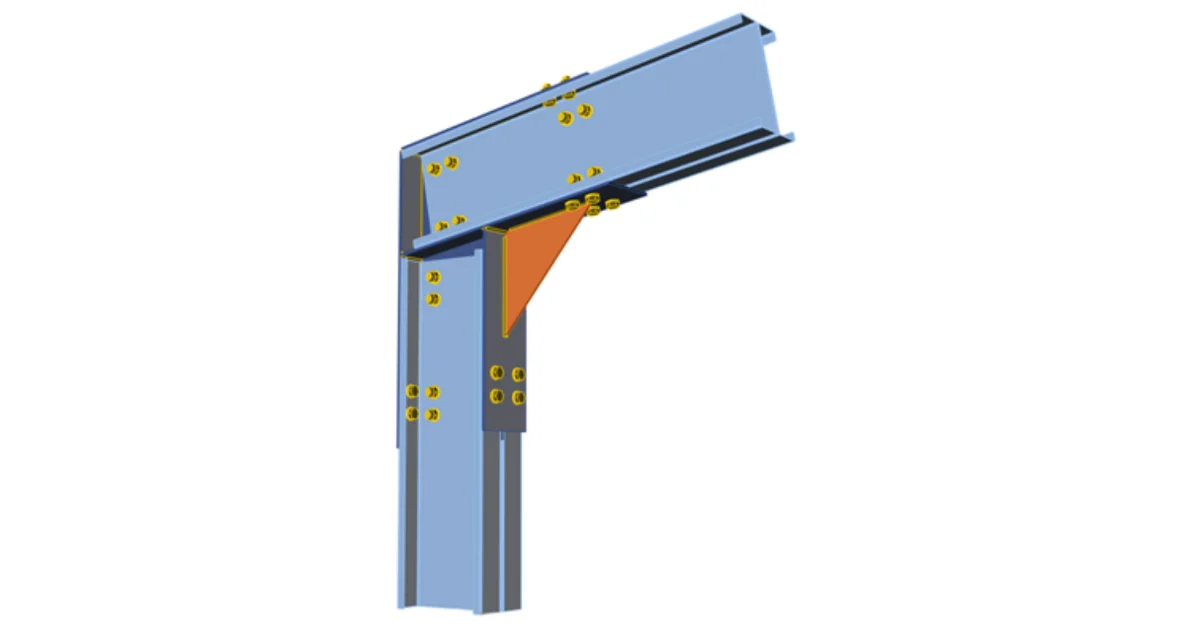
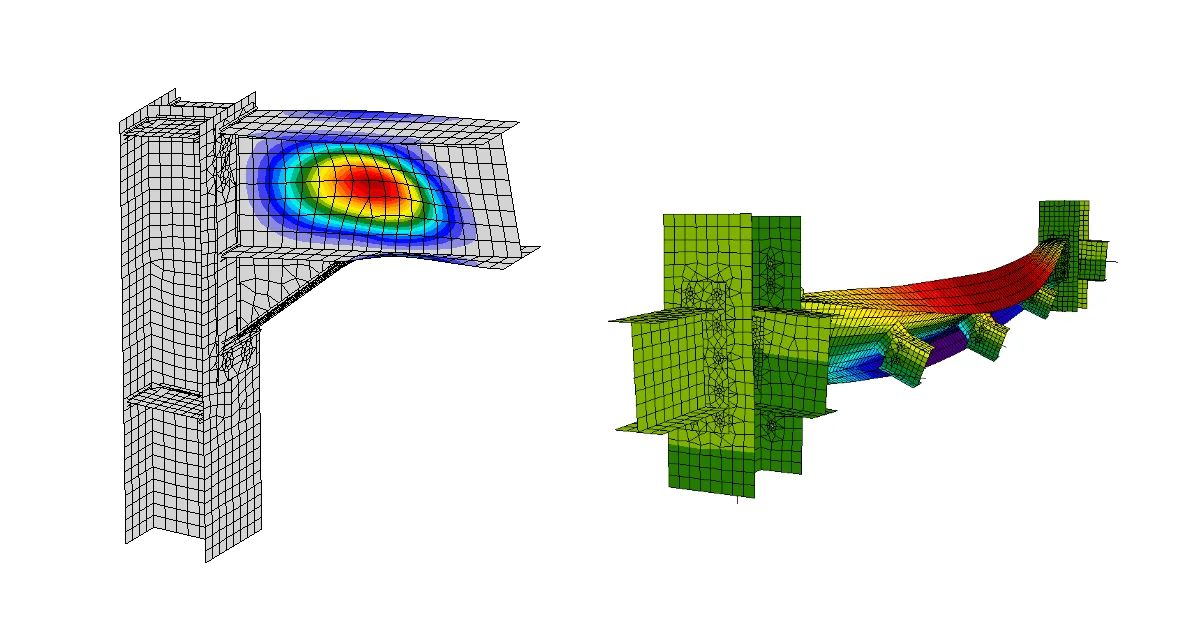
For example, letโ€™s take a look at the following joint:

Thin-walled (cold-formed) members

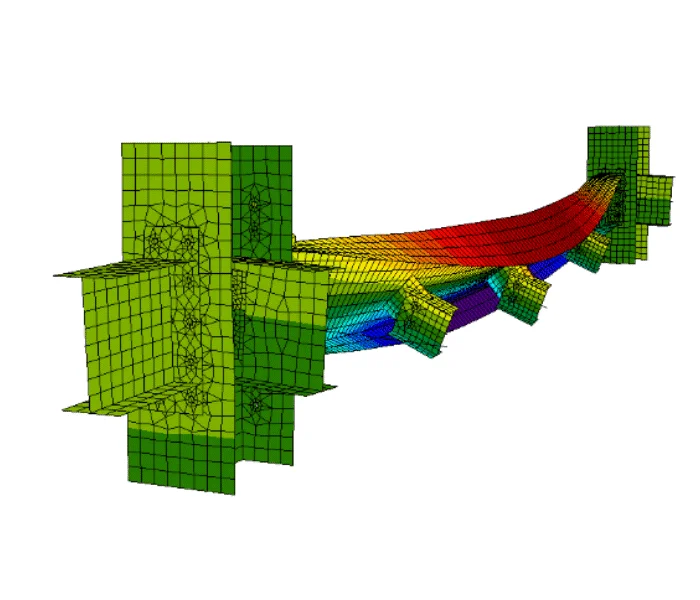
Even though linear buckling analysis was performed, it will not help us to decide if the connection is safe. The model has to be created in a way that we can explore the buckling modes of the connection components (e.g. stiffener, plates, haunches) and decide if the buckling factor of the connected components is higher than the limit value in the code.

Webinar: Focus on buckling

The issue with buckling is a general problem for thin-walled cross-sections.ย Find some useful hints and limitations for thin-walled sections in the attached video from one of our webinars.ย 

Watch the webinar part dedicated to buckling issues, where you can get information about the buckling factor and the impact on the stability by the really low factors. Moreover, see how the workflow with different stiffeners helps you to improve the stability and increase the buckling factor.
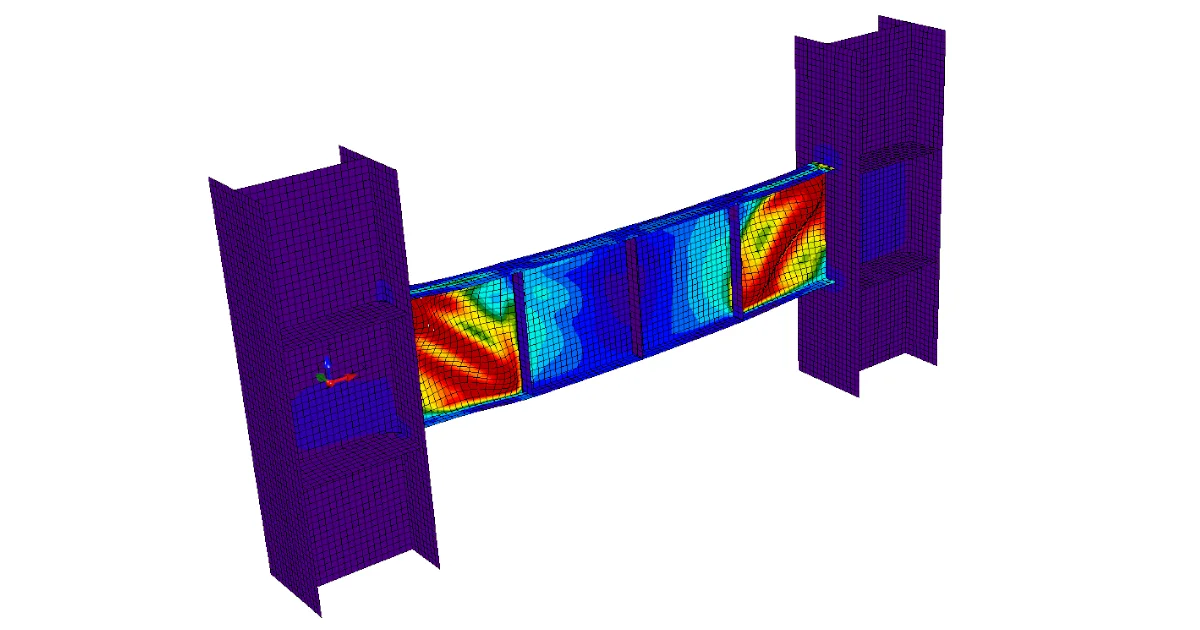
Class 4 cross-sections: slender member plates in Member application
  • Steel
  • Member
  • GMNA
  • CBFEM
  • +4
  • Steel
  • Member
  • GMNA
  • CBFEM

Knowledge base

Class 4 cross-sections: slender member plates in Member application

Read more
Buckling needs critical thinking!
  • Steel
  • Buckling
  • +2
  • Steel
  • Buckling

Blog post

Buckling needs critical thinking!

Read more
Thin-walled (cold-formed) members
For thin-walled members, only geometrically nonlinear analysis with imperfections is suitable. Structural design of steel members in structural engineering software.
  • Steel
  • Connection
  • AISC (USA)
  • AS (Australia)
  • CSA (Canada)
  • EN (Eurocode)
  • IS (India)
  • GB (China)
  • HKG (Hong Kong)
  • CBFEM
  • Buckling
  • SP 16 (Russia)
  • +12
  • Steel
  • Connection
  • AISC (USA)
  • AS (Australia)
  • CSA (Canada)
  • EN (Eurocode)
  • IS (India)
  • GB (China)
  • HKG (Hong Kong)
  • CBFEM
  • Buckling
  • SP 16 (Russia)

Knowledge base

Thin-walled steel members

Read more
IDEA StatiCa Member is structural engineering software for the structural design and code-check of steel members, including their connections and necessary surrounding beams and columns.
  • Steel
  • Member
  • AISC (USA)
  • AS (Australia)
  • CSA (Canada)
  • EN (Eurocode)
  • IS (India)
  • GB (China)
  • HKG (Hong Kong)
  • Buckling
  • SP 16 (Russia)
  • +11
  • Steel
  • Member
  • AISC (USA)
  • AS (Australia)
  • CSA (Canada)
  • EN (Eurocode)
  • IS (India)
  • GB (China)
  • HKG (Hong Kong)
  • Buckling
  • SP 16 (Russia)

Theoretical background

IDEA StatiCa Member โ€“ Member stability

Read more