Idea Statica
  • Steel
  • Concrete
  • Support & Learning
  • Pricing
  • Company
  • Steel overview
  • Connection design
  • Member design
  • Parametric design
  • Steel case studies
  • Concrete overview
  • Walls and D-regions
  • Anchoring design
  • Concrete case studies
  • BIM Overview
  • Supported integrations
  • Checkbot
  • Viewer
  • APIs
  • Support Center
  • E-learning & certification
  • Blog
  • Downloads & Licensing
  • Plans
  • Free community tool
  • Enterprise customers
  • Students & educators
  • How much will you save?
  • About us
  • Contact
  • Research & development
  • Authorized resellers
  • Meet our customers
  • Career
  • Steel
    Steel overviewConnection designMember designParametric designSteel case studies
  • Concrete
    Concrete overviewWalls and D-regionsAnchoring designConcrete case studies
  • BIM OverviewSupported integrationsCheckbotViewerAPIs
  • Support & Learning
    Support CenterE-learning & certificationBlogDownloads & Licensing
  • Pricing
    PlansFree community toolEnterprise customersStudents & educatorsHow much will you save?
  • Company
    About usContactResearch & developmentAuthorized resellersMeet our customersCareer
14-Day Trial
14-Day Trial

Subscribe to our newsletter

Company

  • About us
  • Partners
  • Careers
  • Patent

Resources

  • Customer projects
  • Case studies
  • Connection Library
  • Verification books

Legal

  • EULA
  • Privacy policy
  • California Privacy
  • TOS Viewer
  • Licensing

Help

  • Contact
  • Quote request
  • Resellers
  • Downloads
FacebookInstagramLinkedInYouTube

© IDEA StatiCa 2009-2026

Trusted and used worldwide by engineers, fabricators & consultants.

Support CenterKnowledge Base ArticlesCode and calculation settings in Detail application
Codes supported in IDEA StatiCa Concrete
Code and calculation settings in Detail application
Combinations and strength reduction factor in ACI
Improvements for ACI 318-19 in Detail
Australian code for Detail
What is the Topology optimization for? And how does it go with the strut and tie method?
Imperial rounding improvements in Detail
Code and calculation settings in Detail application
ConcreteReinforced concreteKnowledge baseDetail 2DEN (Eurocode)

Code and calculation settings in Detail application

This article is also available in
ENCZDEESFRITPTNLHUROKRPLTHTRVIZH

This article covers the settings that need to be checked or adjusted before running the calculation. The code-based settings have been omitted in the article. The further text focuses on the analysis and mesh settings.

To access the setting, continue to the Design -> Settings in the top ribbon.

When you click on the button, the Code and calculation settings window appears.
Stop at limit strain/slip

This option is turned on by default. You can read about stop limit criteria in the following article.

  • Solution method and load-control algorithm

Irregular increments

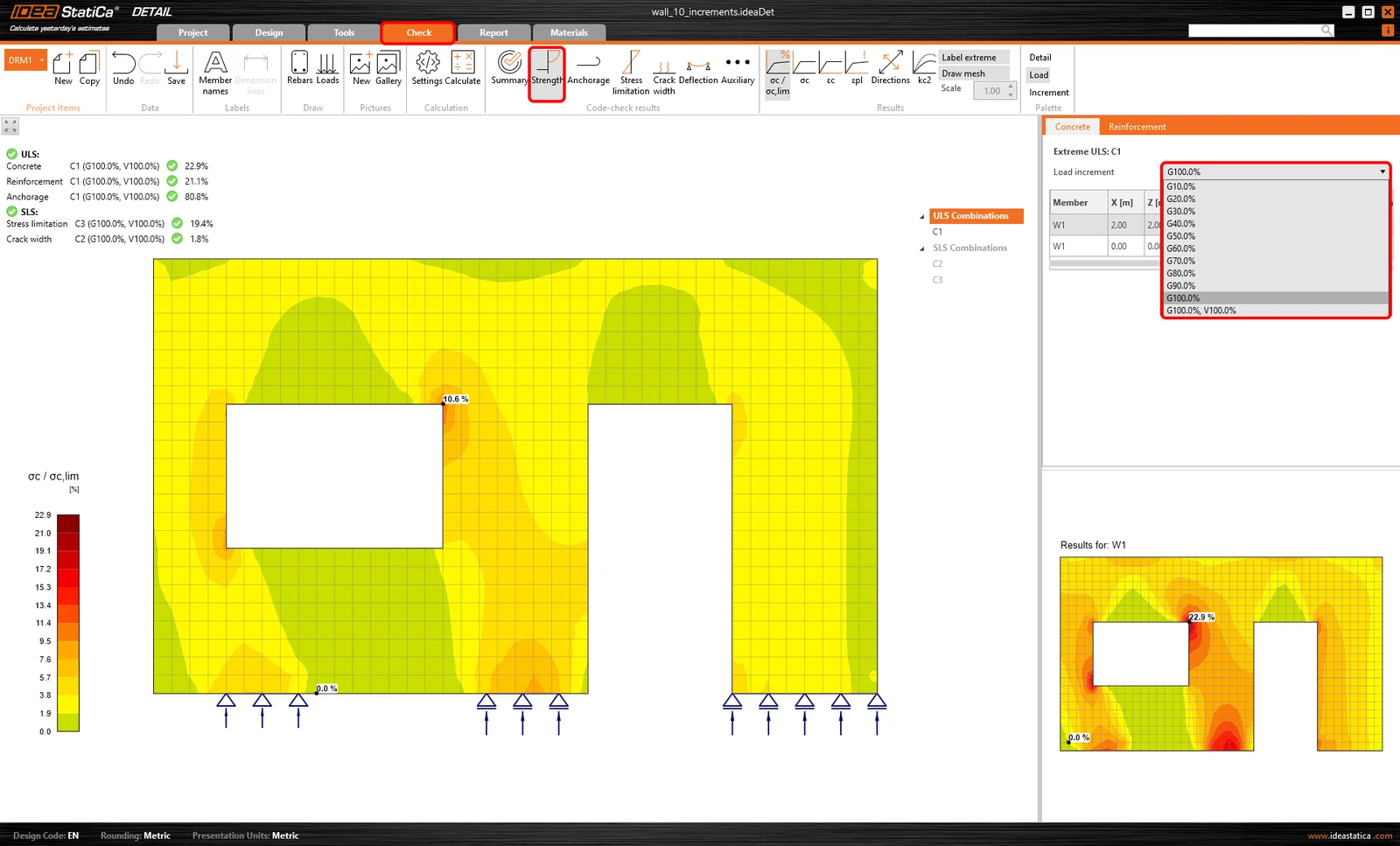
Increments are, by default, 10%. You can change the algorithm to increase the speed of calculation. 

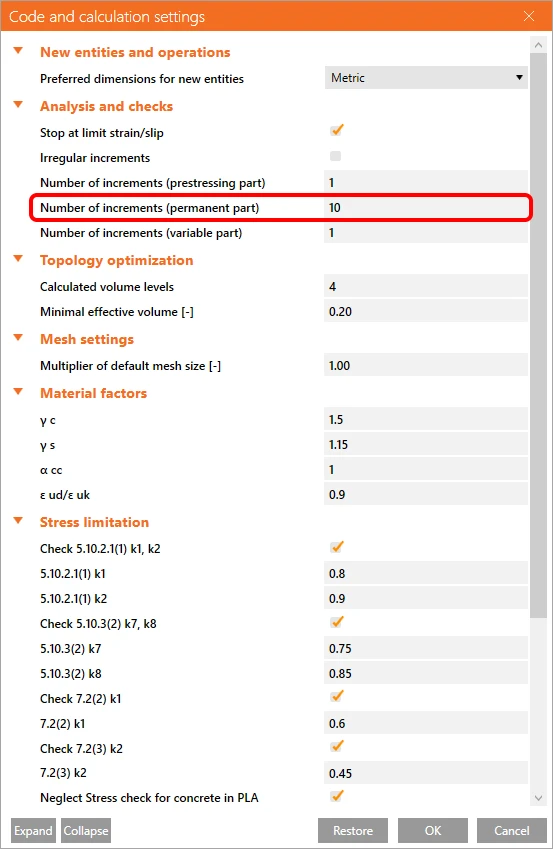
Number of increments

The program can display results for an inputted number of increments of each load type. In the figure below, you can see 10 increments of 10% of the permanent load.
Topology optimization settings

You can also control the number of effective volumes and the size. To learn more about topology optimization, read the Theoretical background.

Multiplier of default mesh size

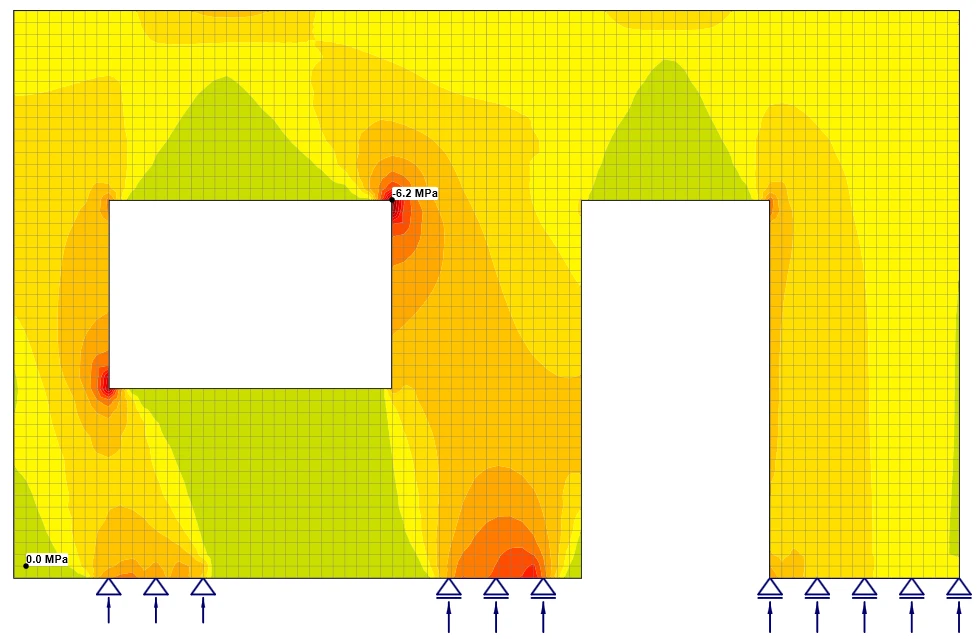
The default value of the multiplier is 1,0. Mesh created with this multiplier is verified and recommended for the checks. To speed up the calculation during optimization, it is possible to adjust the multiplier. 

The limit values of the multiplier are 0,5 (fine mesh) and 5 (coarse mesh).
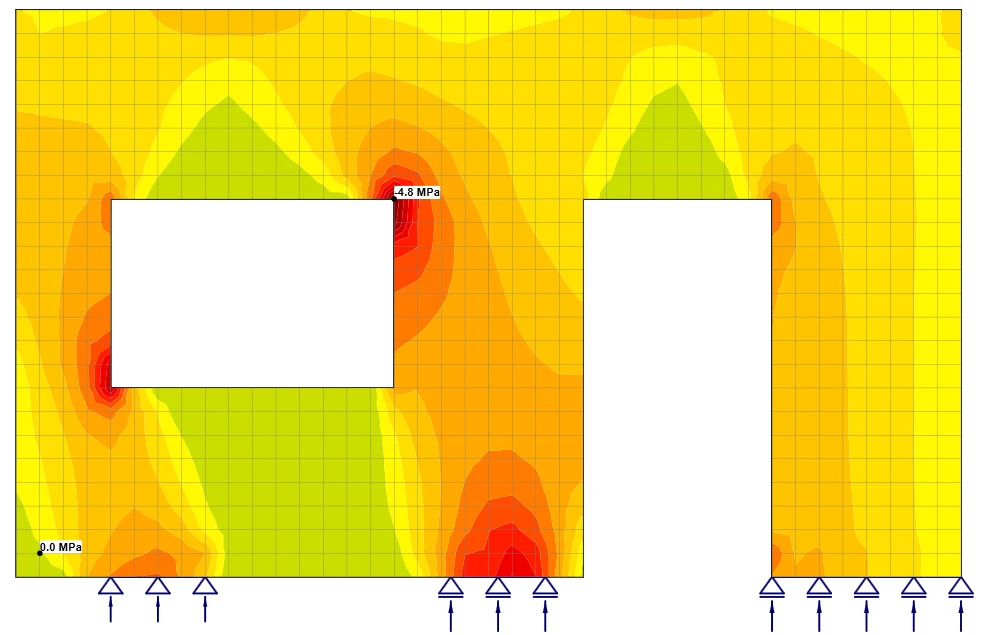
Fine mesh -> 0.5\textsf{\textit{\footnotesize{Fine mesh -> 0.5}}}Fine mesh -> 0.5

Standard mesh -> 1.0\textsf{\textit{\footnotesize{Standard mesh -> 1.0}}}Standard mesh -> 1.0

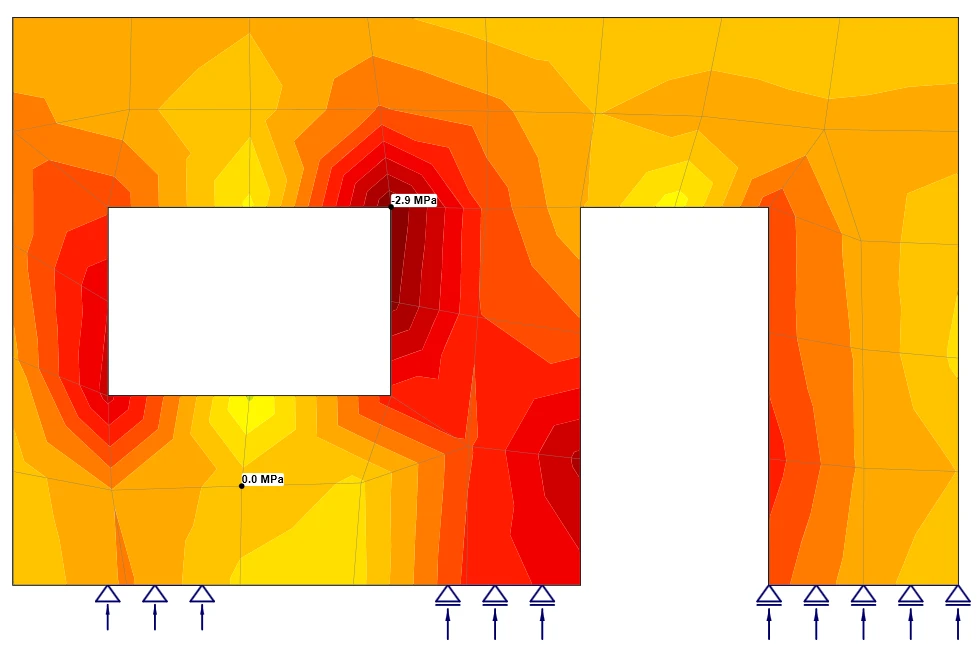
Coarse mesh -> 5.0\textsf{\textit{\footnotesize{Coarse mesh -> 5.0}}}Coarse mesh -> 5.0

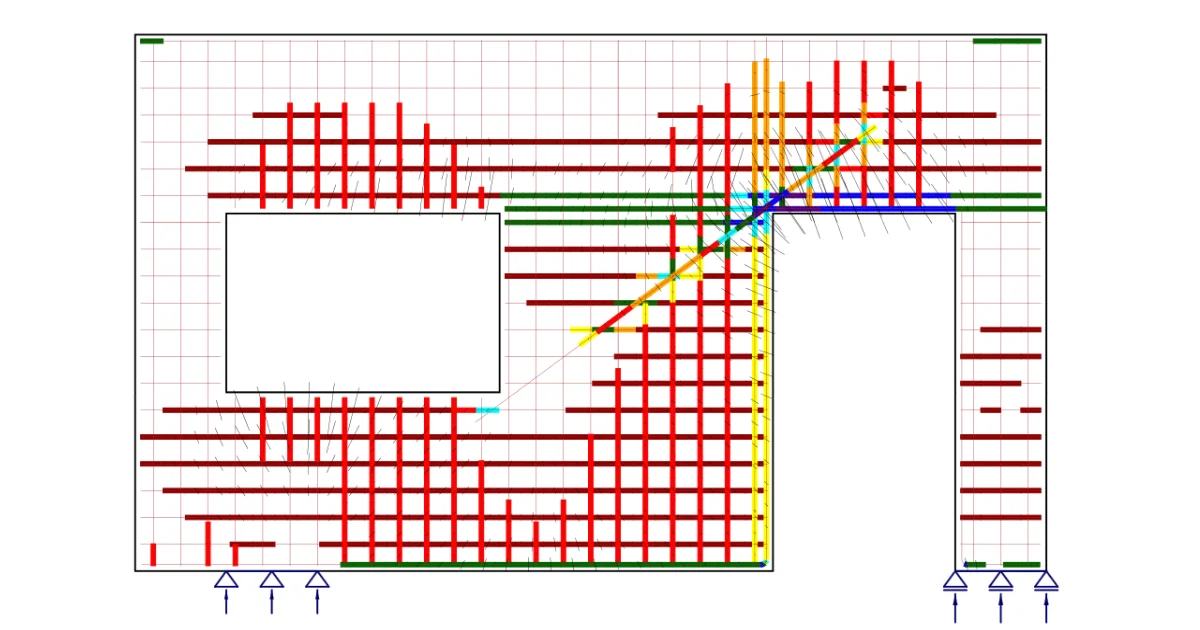
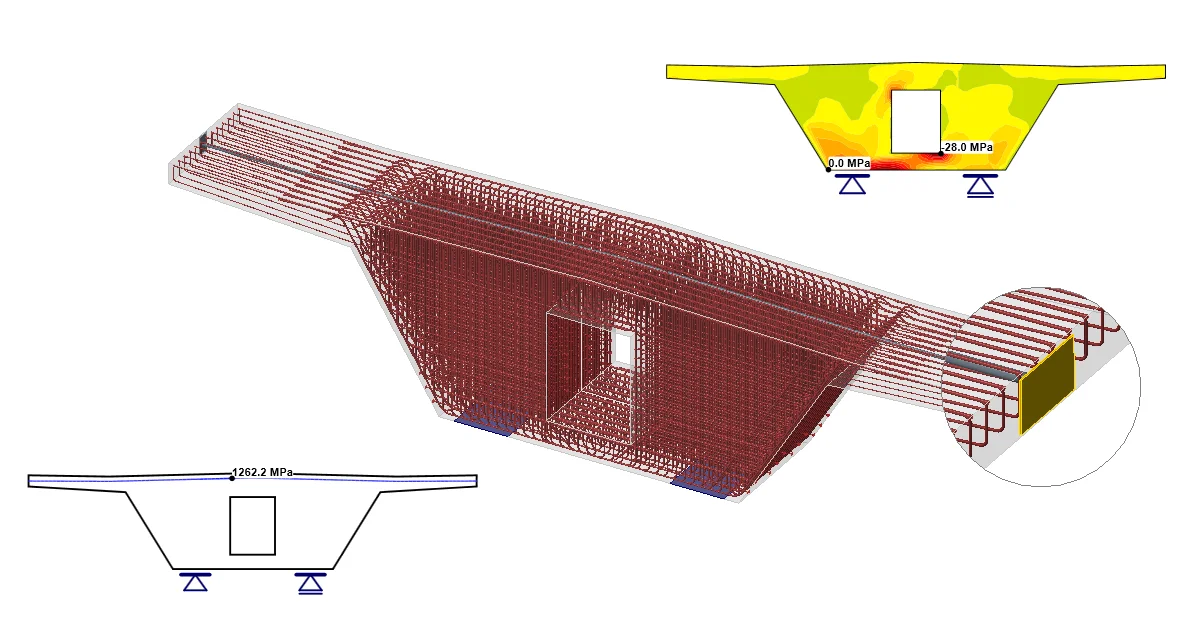
Please note that the multiplier influences the mesh of the reinforcement as well as the mesh of the concrete. The previous figures are from the same model. The dependency between the multiplier and results can be seen in the figures.

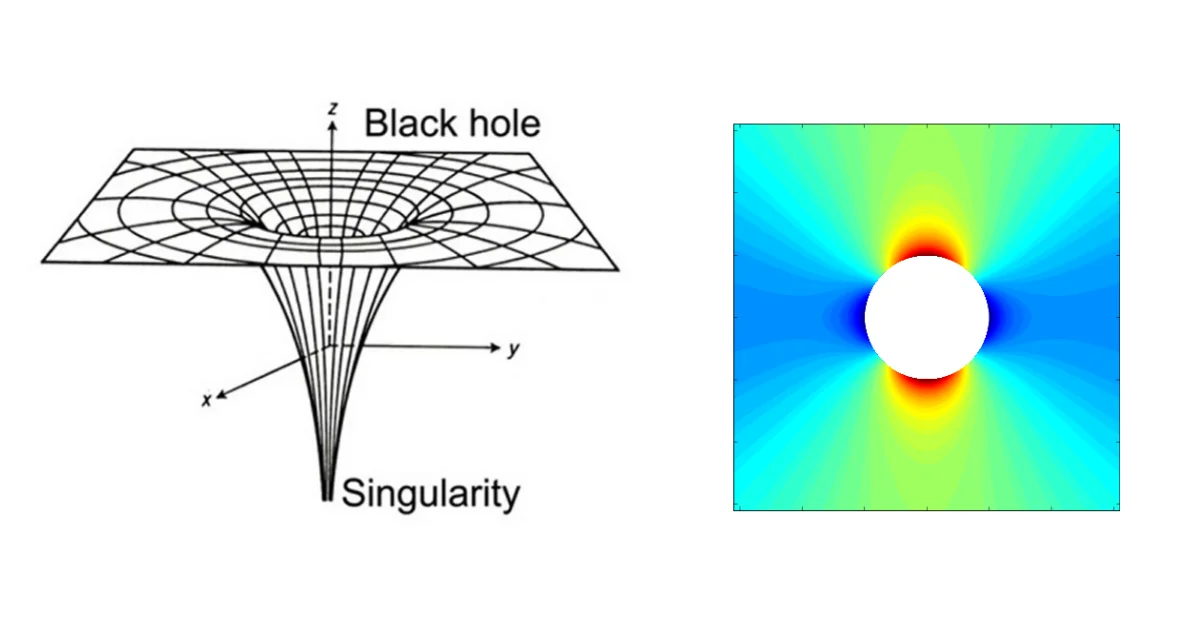
Moreover, the behavior of the sharp corner is also shown. To learn more about sharp corners, watch the linked webinar.
  • Solve critical parts of shear walls

Related articles

IDEA StatiCa Detail is concrete design software for the structural design and code-check of concrete discontinuity regions. Concrete members stress analysis & concrete wall design.
  • Concrete
  • ACI (USA)
  • EN (Eurocode)
  • Geometry
  • Load effects
  • Overall check
  • Material settings
  • Corbels/Brackets
  • CSFM
  • Cracks
  • Deflections
  • Diaphragms
  • Openings
  • SLS
  • Stress in reinforcement
  • TDA
  • Topology optimization
  • ULS
  • Detail 2D
  • +19
  • Concrete
  • ACI (USA)
  • EN (Eurocode)
  • Geometry
  • Load effects
  • Overall check
  • Material settings
  • Corbels/Brackets
  • CSFM
  • Cracks
  • Deflections
  • Diaphragms
  • Openings
  • SLS
  • Stress in reinforcement
  • TDA
  • Topology optimization
  • ULS
  • Detail 2D

Theoretical background

IDEA StatiCa Detail – Structural design of concrete discontinuities

Read more
Prestressed bridge diaphragm (EN)
  • Concrete
  • Detail 2D
  • EN (Eurocode)
  • Diaphragms
  • Bridges
  • +5
  • Concrete
  • Detail 2D
  • EN (Eurocode)
  • Diaphragms
  • Bridges

Tutorials

Prestressed bridge diaphragm (EN)

Read more
Singularities vs. stress concentration area
  • Steel
  • Concrete
  • Detail 2D
  • Member
  • +4
  • Steel
  • Concrete
  • Detail 2D
  • Member

Knowledge base

Singularities vs. stress concentration area

Read more