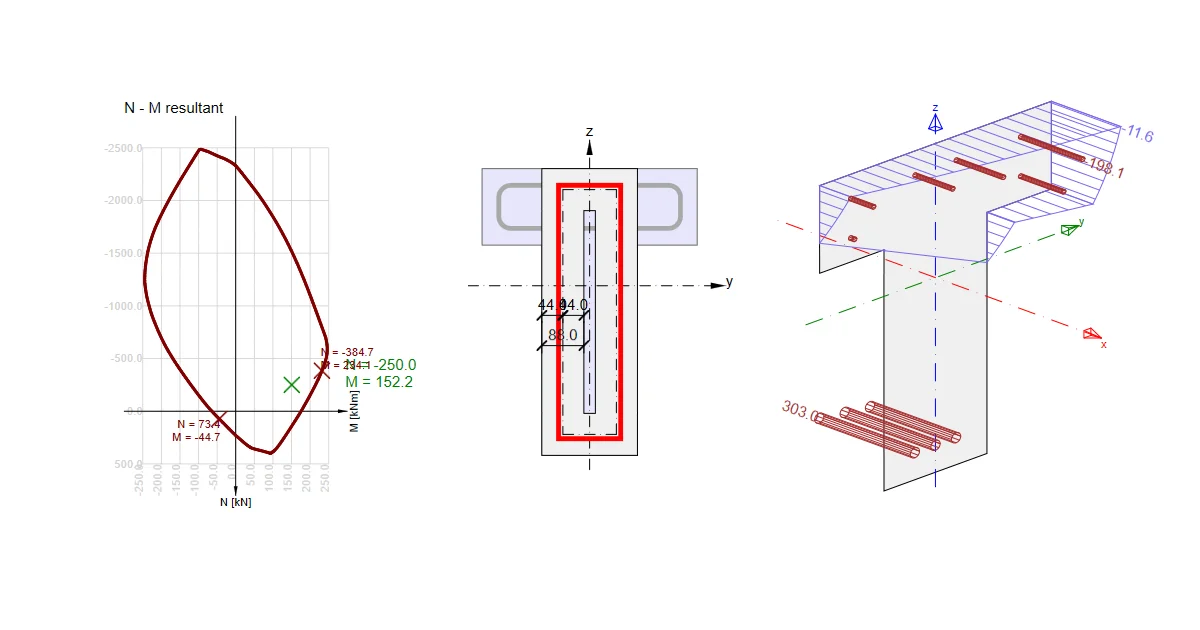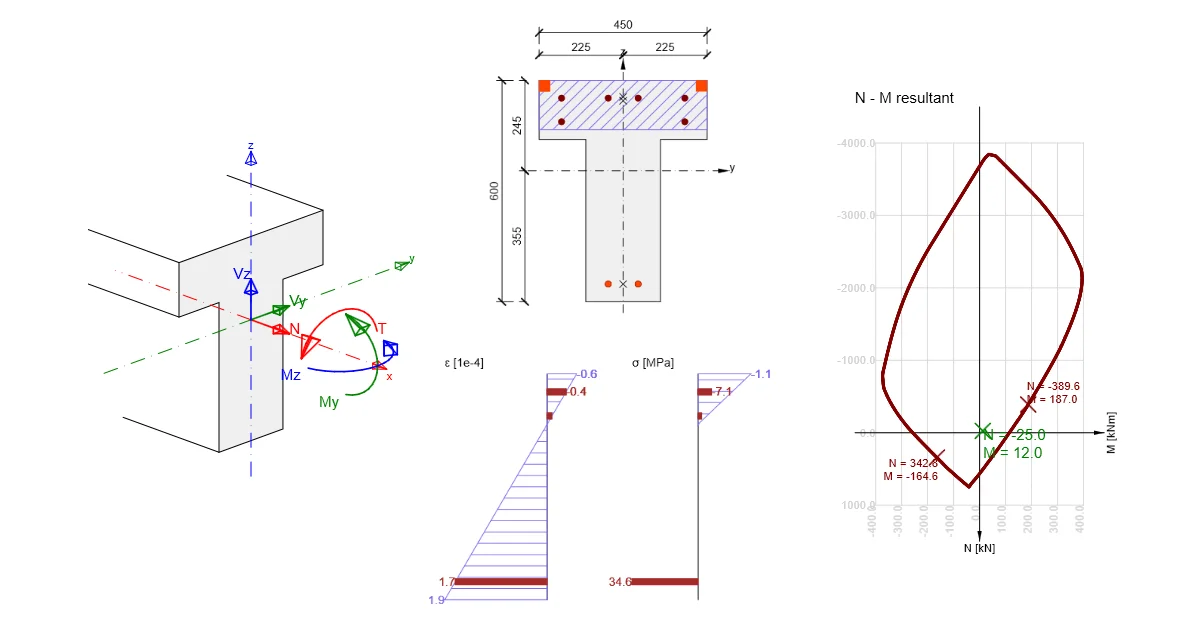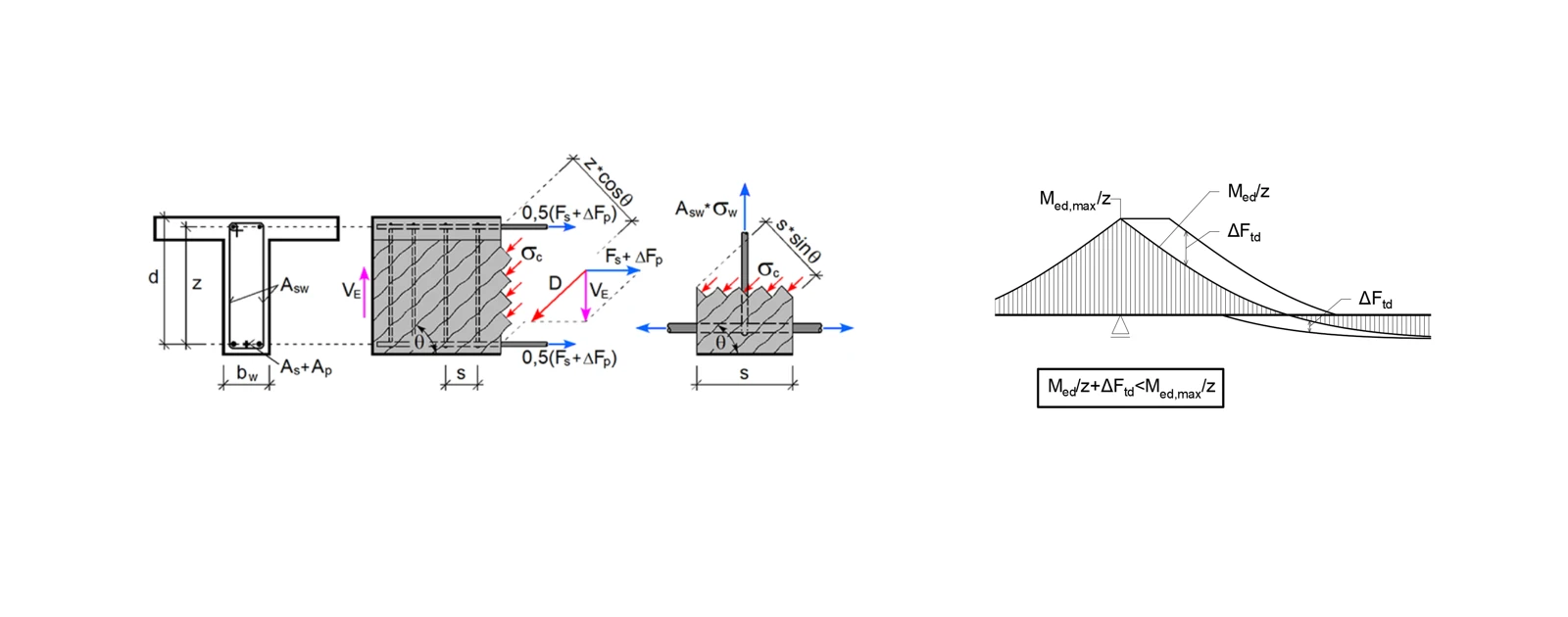


First, let's look at exactly how this feature influences checks. As the name implies, it is a modification of the Interaction check. You can read more about the check itself at the following links.
In the linked article, you will find that the check deals with the interaction between shear, torsion, and bending. The Limited interaction check feature affects how the longitudinal force from shear ΔFtd,s is used, which is added to the longitudinal force from torsion ΔFtd,t and combined with the bending in the Interaction check.
In the following article, you can discover how the longitudinal force from shear ΔFtd,s is applied to a cross-section for the purpose of interaction assessment.
In brief: the longitudinal shear force ΔFtd,s is calculated.
Then it is applied to the shear-resisting section to its center of gravity, or to the center of gravity of the whole section if the shear-resisting section cannot be determined. Next, the longitudinal torsional force is determined and the section is evaluated for the combination of N+My+Mz+ΔFtd,s+ΔFtd,t in the Interaction check.
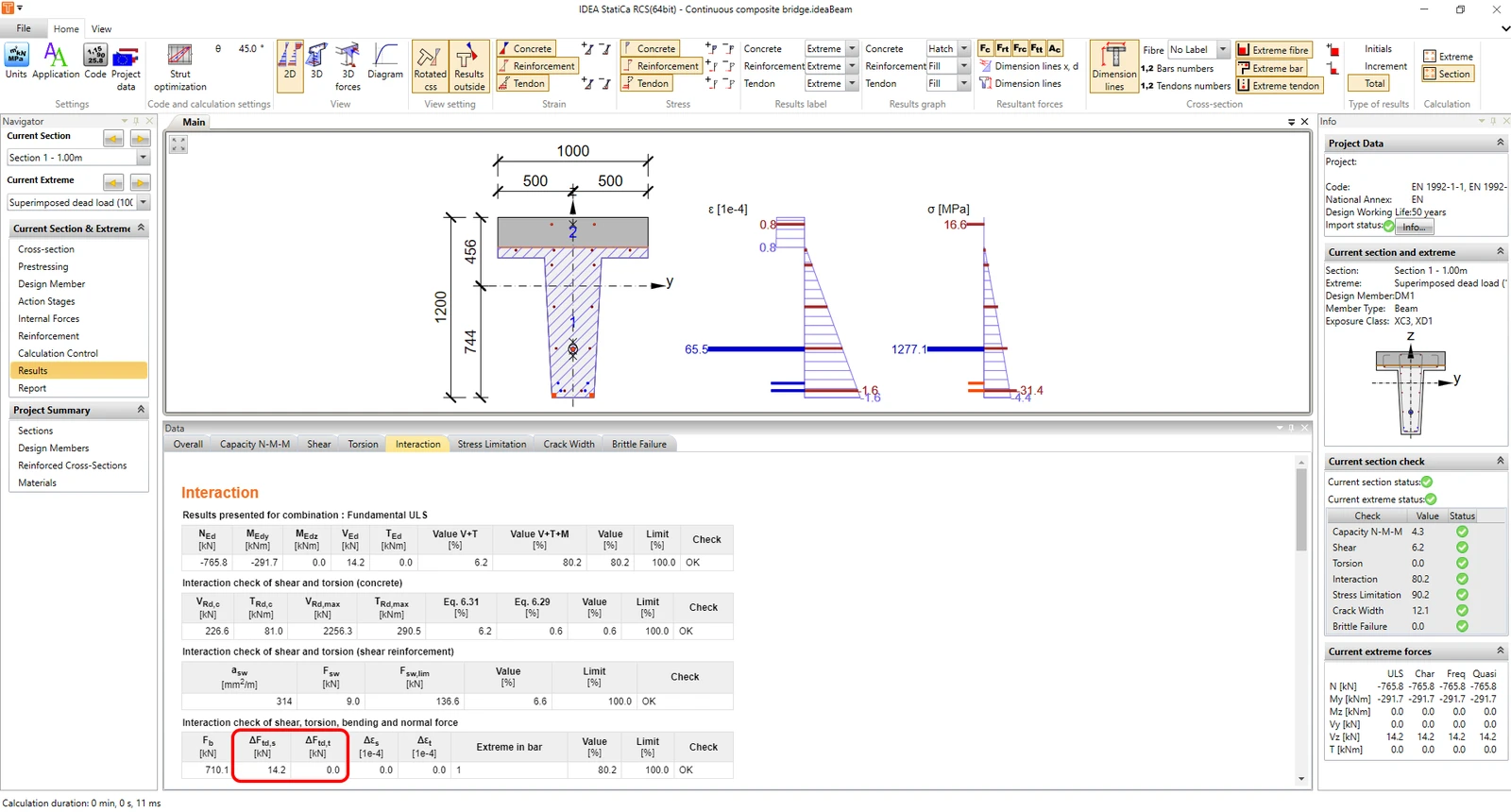
Now, we are finally getting to what this feature can do. If the Limited interaction check checkbox is checked, the longitudinal force from the shear is not taken into account in the interaction check under certain conditions. So, let's see how this exclusion works first in the RCS application and then in the Beam application.
Limited interaction check in the RCS application
The following text refers to an example where we use the RCS application as a standalone. The functionality can be found in the Design Member section.
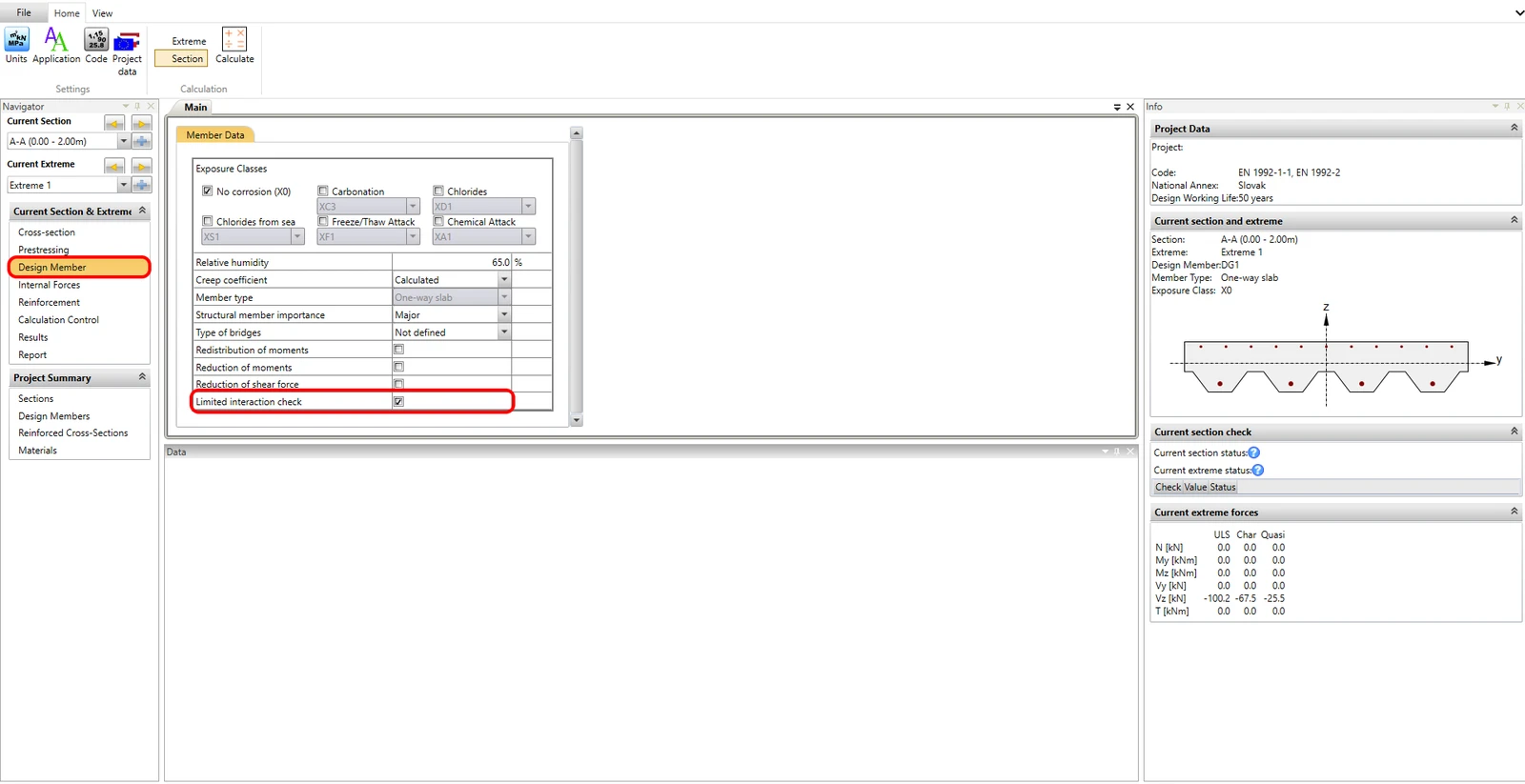
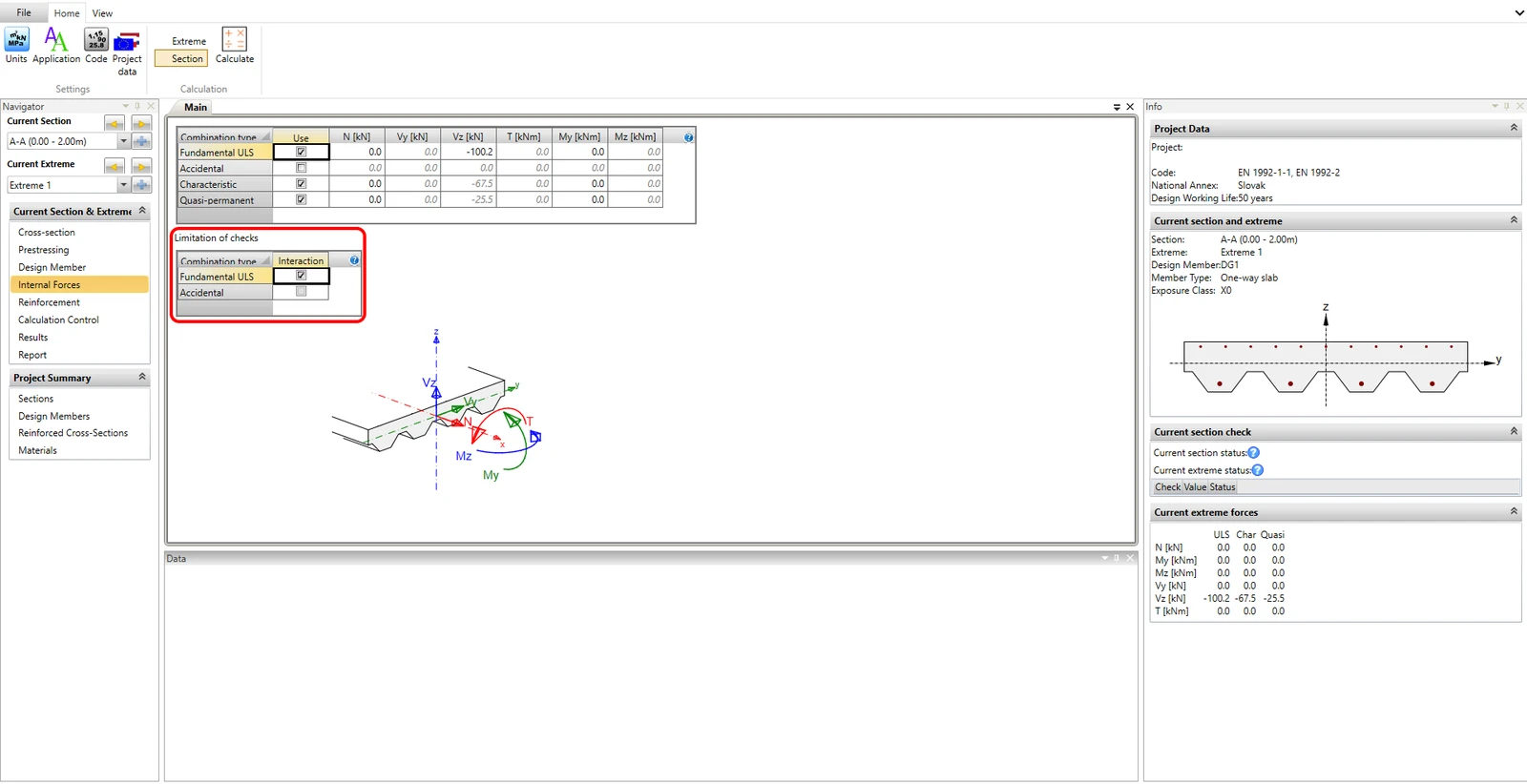
If it is switched on, the longitudinal force from the shear ΔFtd,s will not be applied to any Section or extreme in the project. It is also necessary to remember to define for which ULS combination it will be valid.
Limited interaction check in the Beam application
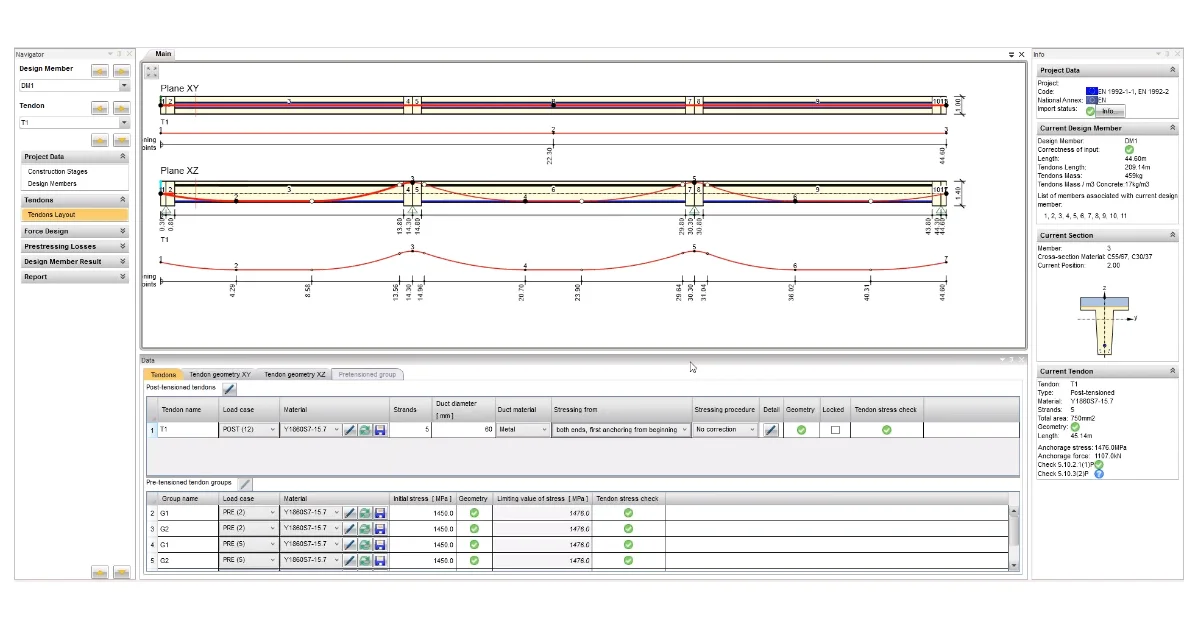
In the Beam application, you can find this functionality in Concrete Design 1D – Data.
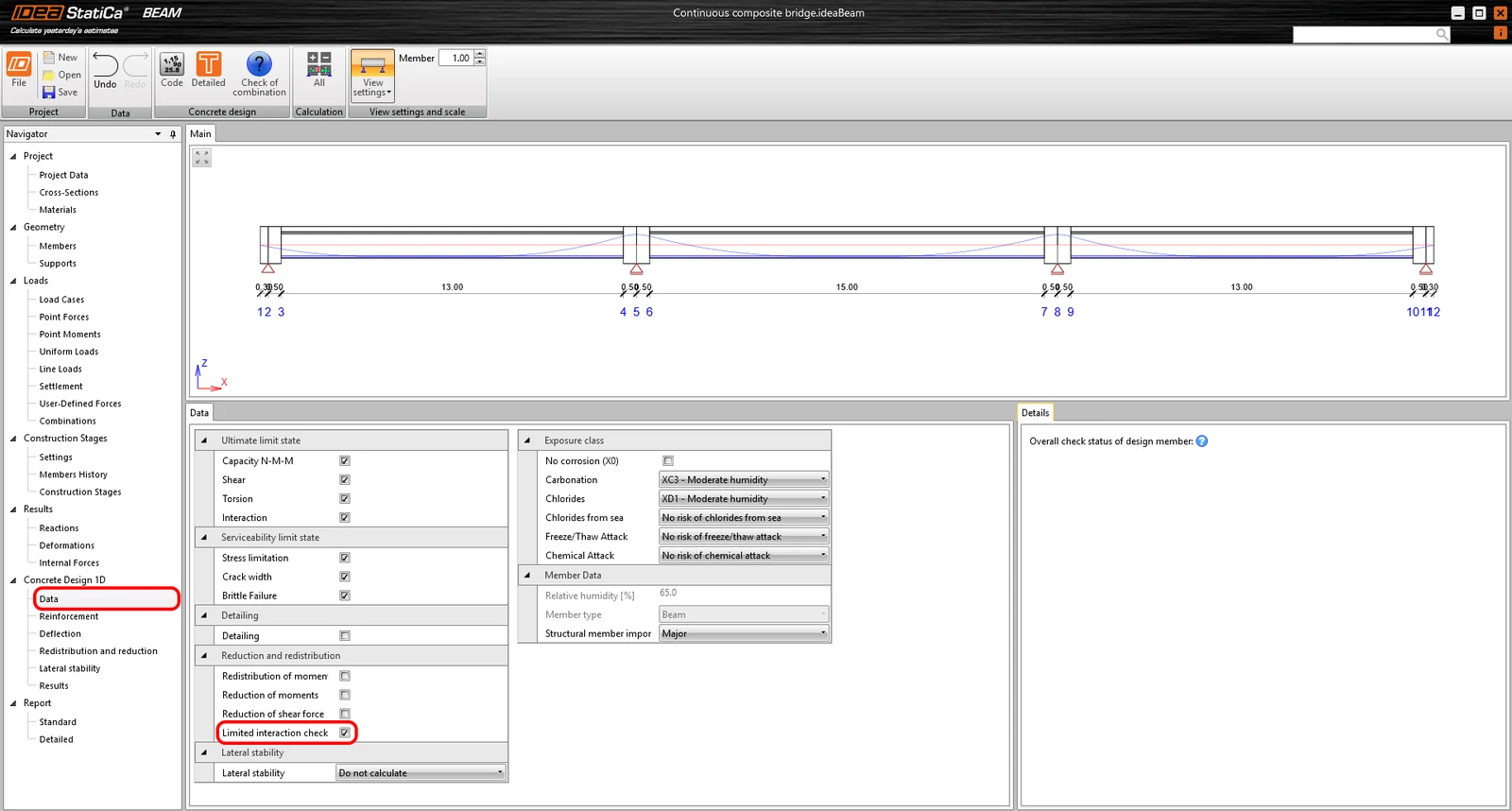
If enabled, regions at distance d (effective depth of cross-section) from the support are defined on the beam where the longitudinal force from shear ΔFtd,s is excluded.
This means that if you define a Check position to this region and go to the RCS application to view the code-checks using the Detailed button in the top ribbon, you will see a zero ΔFtd,s value for these Sections. Sections outside will be checked, including the ΔFtd,s force.
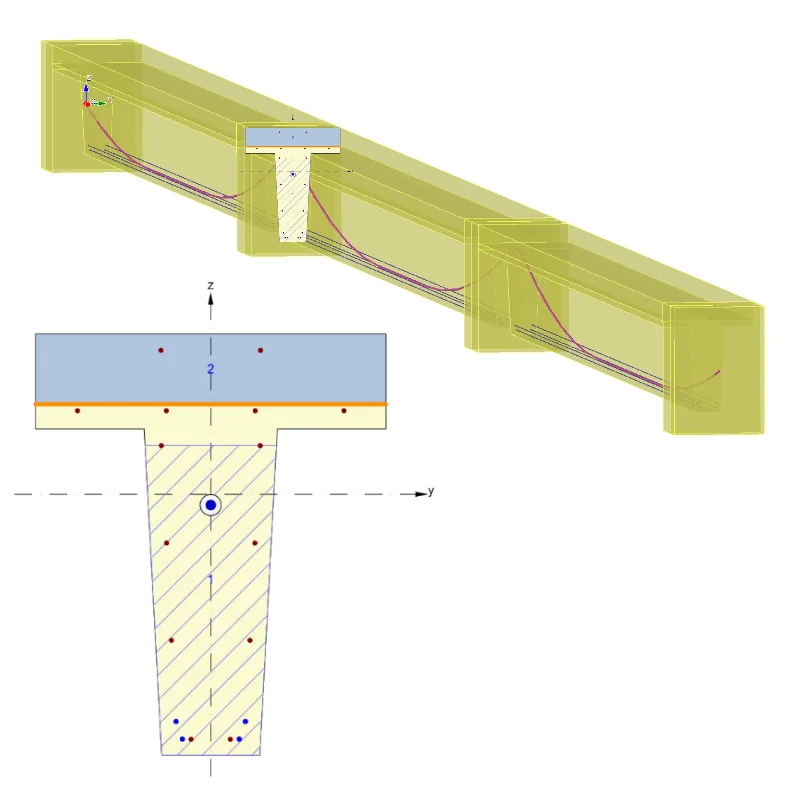
In the following figure, it means that sections 1, 2, and 5 will be checked with ΔFtd,s excluded.
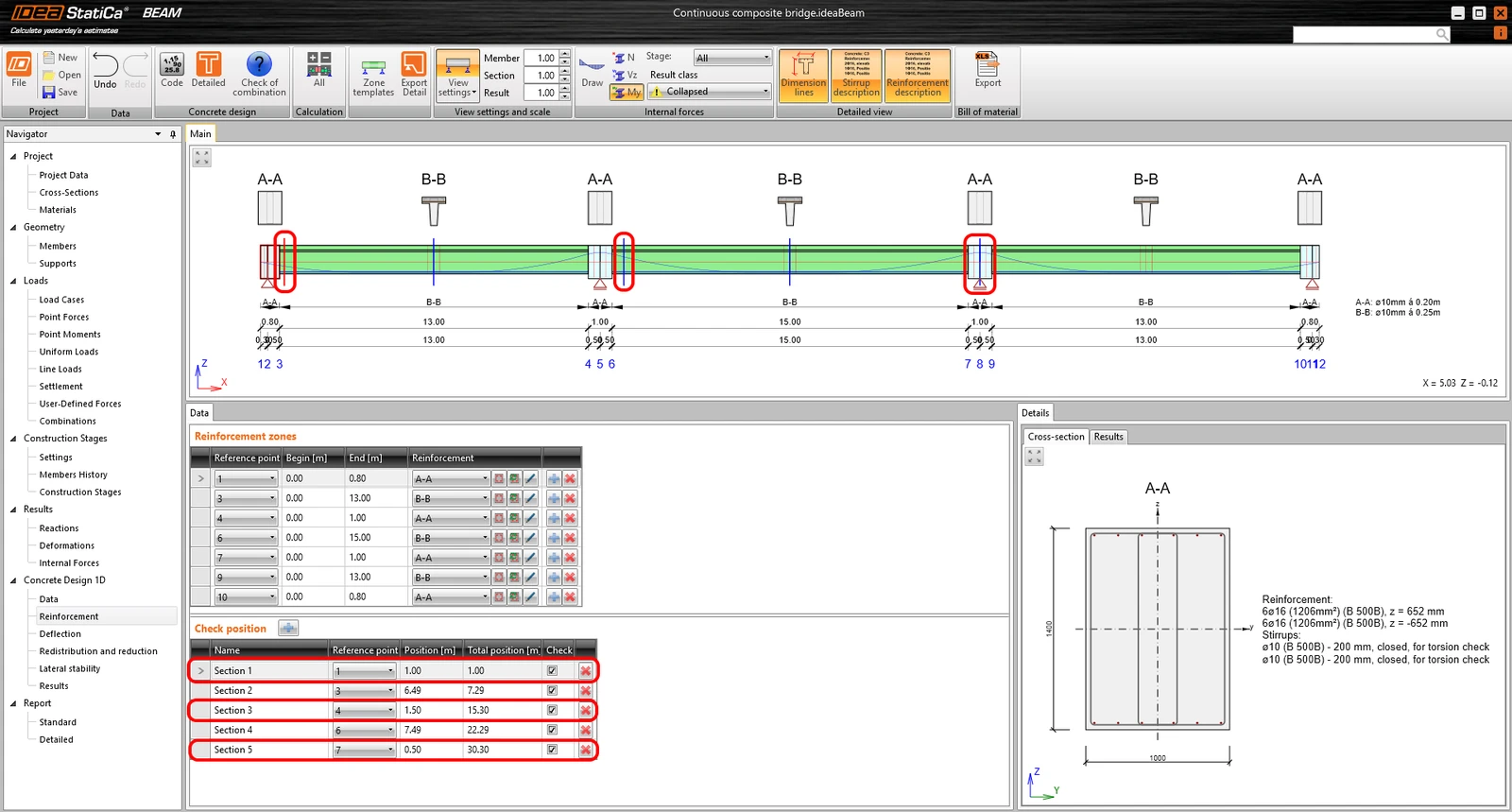
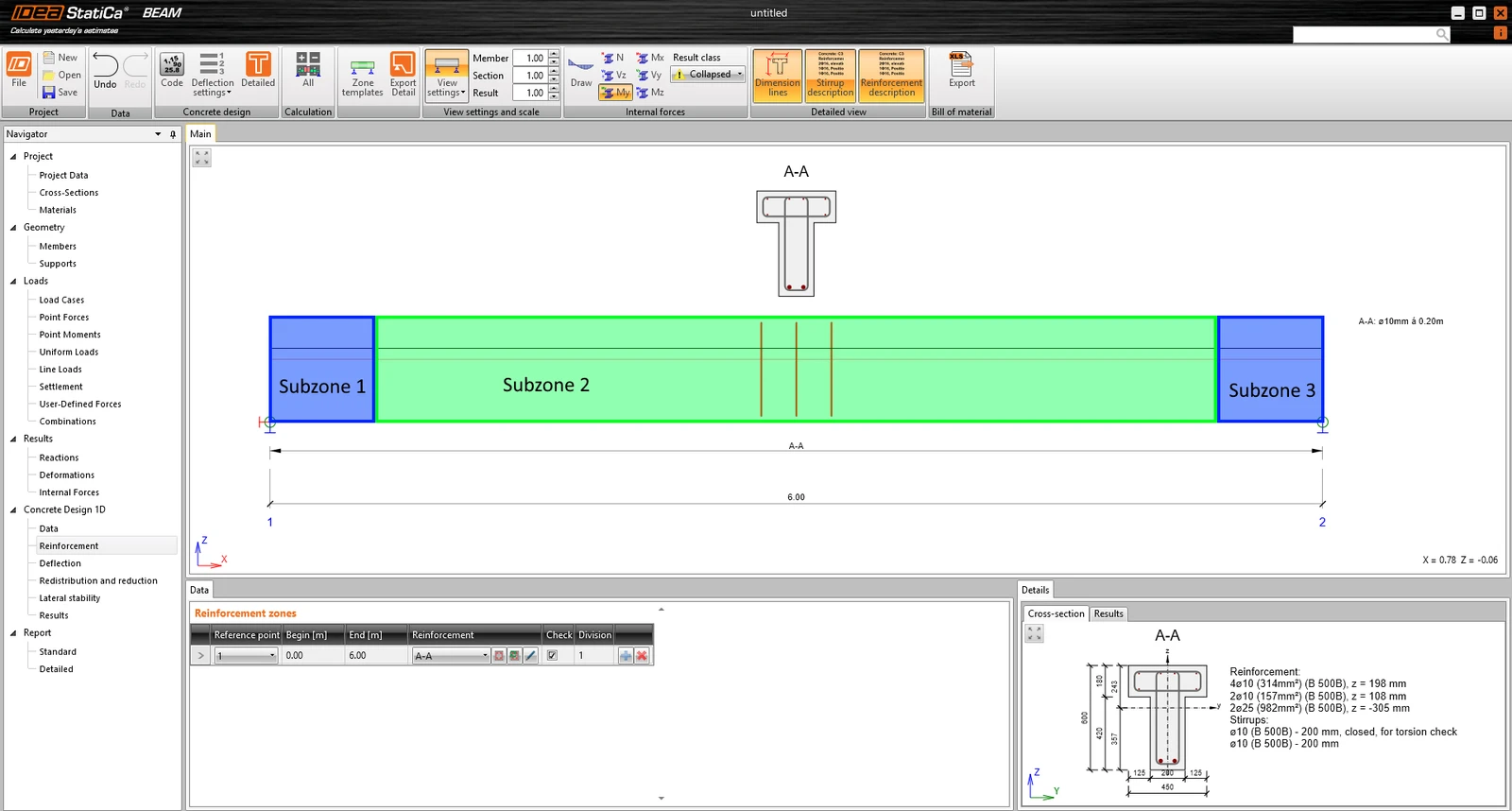
The figure shows an example of a staged beam (containing Construction stages) where Check positions are defined directly. For the case of a reinforced concrete beam, where so-called Reinforcement zones are defined, which represent a single Reinforced cross-section and for which extremes are automatically searched for design, these reinforcement zones near the supports are divided into subzones (of length d from the support). Extremes are then searched for the subzones separately, resulting in a larger number of extremes.
We will show this with the example of a simple beam where we have defined only one Reinforcement zone.
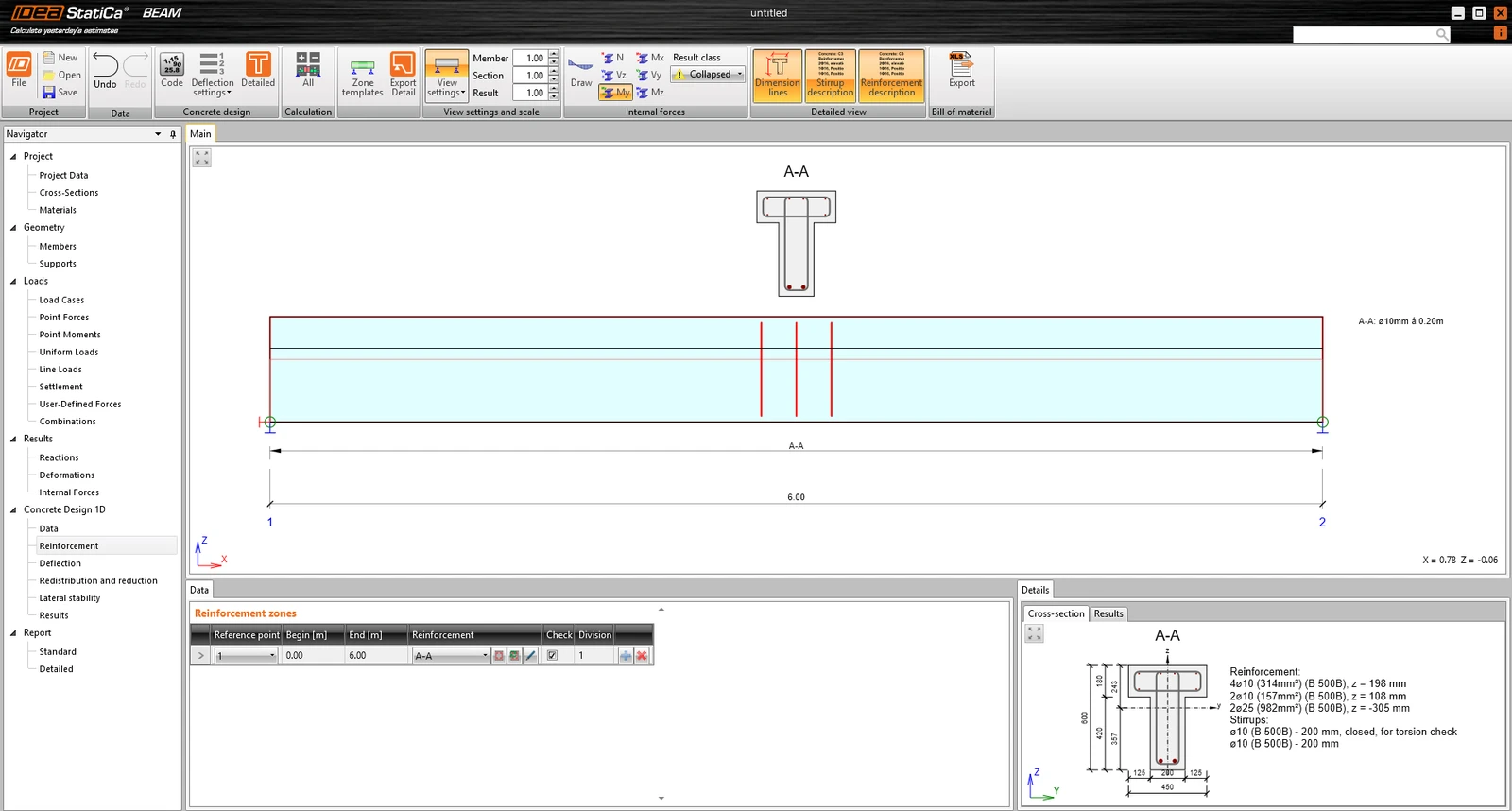
If the Limited interaction check is turned off (the default setting), the extremes for all internal forces will be found in this one zone and the cross section will be evaluated including the ΔFtd,s force for all of them.
If Limited interaction check is enabled, the zone is divided into three subzones for which extremes are found independently. In the Detailed Results in RCS, we then see that for the extremes that fall in the outermost subzones, ΔFtd,s is excluded and for the extremes of the middle subzone, ΔFtd,s is included in the Interaction check.
Follow-up to Eurocode
Clause 6.2.3 (7) in EN 1992-1-1 states the necessity to include the longitudinal tensile force in the longitudinal reinforcement of the tensioned web, with the proviso that the value MEd,max/z is not to be exceeded. The Beam application, on the other hand, assumes that it will be present in the Strut-and-Tie model of the beam after the first strut. If we assume that the angle of the first strut is 45°, the first strut will end at the aforementioned distance d. The condition (MEd/z) + ΔFtd ≤ MEd,max/z is not directly controlled and it may happen that at a distance slightly greater than d from the support, a larger longitudinal force from the shear is applied than what is required according to the code.