Idea Statica
  • Steel
  • Concrete
  • Support & Learning
  • Pricing
  • Company
  • Steel overview
  • Connection design
  • Member design
  • Parametric design
  • Steel case studies
  • Concrete overview
  • Walls and D-regions
  • Anchoring design
  • Concrete case studies
  • BIM Overview
  • Supported integrations
  • Checkbot
  • Viewer
  • APIs
  • Support Center
  • E-learning & certification
  • Blog
  • Downloads & Licensing
  • Plans
  • Free community tool
  • Enterprise customers
  • Students & educators
  • How much will you save?
  • About us
  • Contact
  • Research & development
  • Authorized resellers
  • Meet our customers
  • Career
  • Steel
    Steel overviewConnection designMember designParametric designSteel case studies
  • Concrete
    Concrete overviewWalls and D-regionsAnchoring designConcrete case studies
  • BIM OverviewSupported integrationsCheckbotViewerAPIs
  • Support & Learning
    Support CenterE-learning & certificationBlogDownloads & Licensing
  • Pricing
    PlansFree community toolEnterprise customersStudents & educatorsHow much will you save?
  • Company
    About usContactResearch & developmentAuthorized resellersMeet our customersCareer
14-Day Trial
14-Day Trial

Subscribe to our newsletter

Company

  • About us
  • Partners
  • Careers
  • Patent

Resources

  • Customer projects
  • Case studies
  • Connection Library
  • Verification books

Legal

  • EULA
  • Privacy policy
  • California Privacy
  • TOS Viewer
  • Licensing

Help

  • Contact
  • Quote request
  • Resellers
  • Downloads
FacebookInstagramLinkedInYouTube

© IDEA StatiCa 2009-2026

Trusted and used worldwide by engineers, fabricators & consultants.

Support CenterKnowledge Base ArticlesCombining pre- and post-tensioned tendons
Combining pre- and post-tensioned tendons
Tendons out of the section
How the rinf and rsup coefficients are taken into account for SLS checks
Combining pre- and post-tensioned tendons
ConcreteReinforced concretePrestressed concreteKnowledge baseBeam

Combining pre- and post-tensioned tendons

This article is also available in
ENCZDEESFRITPTNLHUROKRPLTHTRVIZH

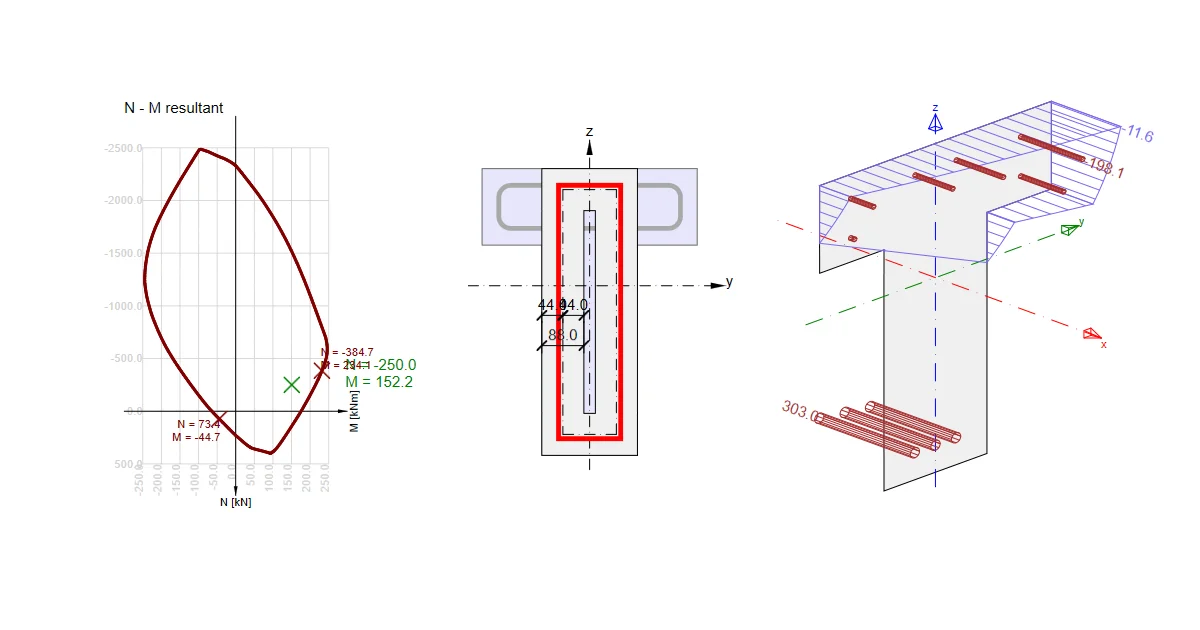
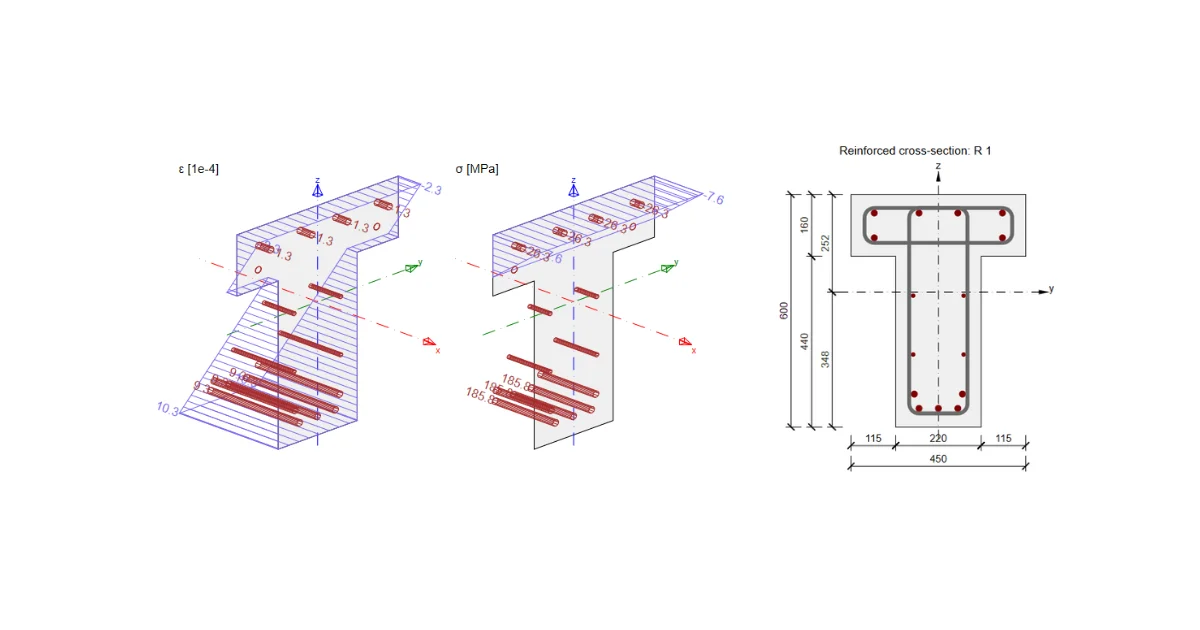
IDEA StatiCa Beam provides designing and code-checking of prestressed continuous composite beams (type concrete-concrete), combining pre- and post-tensioned tendons.

There are two workflows for how to design the prestressed beam in IDEA StatiCa software, which can be even composite (concrete-concrete) with a combination of pre- and post-tensioned tendons. 

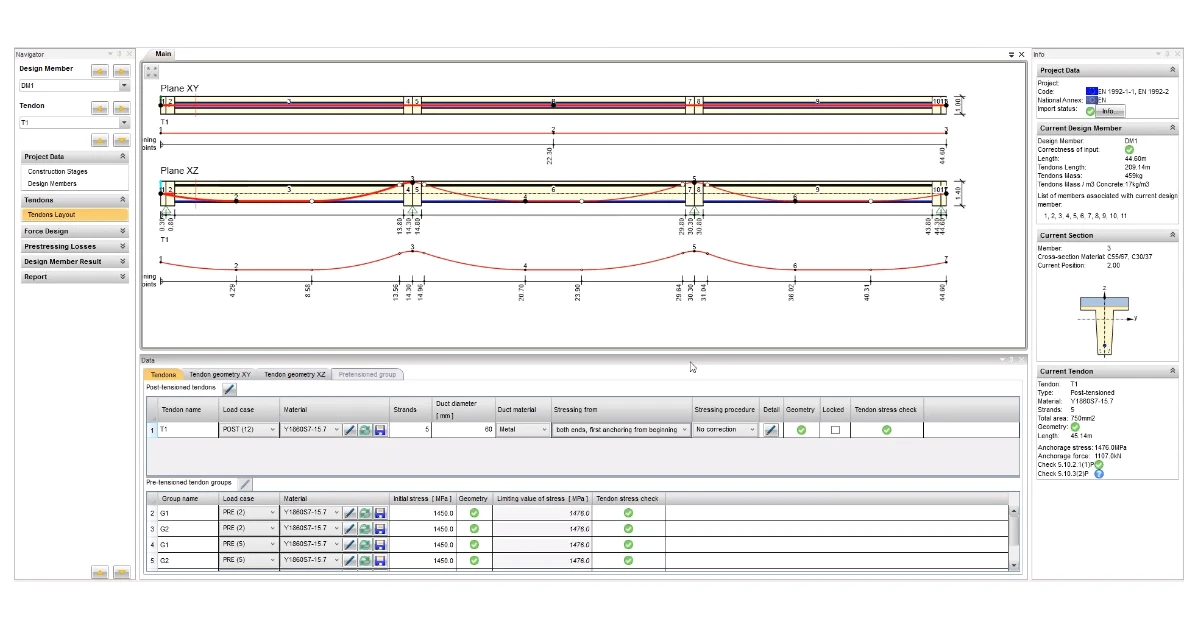
  • Using the Beam application, where you can calculate a complete TDA analysis, use data import from 3rd party software, design the geometry of the tendons, etc. And of course design and code-check all cross-sections using implemented RCS module.
  • Input the results of global analysis from FEA software to the RCS application. Where you can do a complete design and code-check of cross-sections (composite with a combination of pre- and post-tensioned tendons).

For the first approach watch the video below, where the complete workflow is shown, and where you will for example see how the templates speeds-up the definition of tendon layout, prestressing losses, equivalent load due to prestess, etc. This is possible even for complex models like composite cast-in-situ slab laying on precast beams that form a skew bridge supported by elastomer bridge bearings, where the precast beams are indirectly supported by cast-in-situ diaphragms. 

For the second approach, we recommend diving into the Campus course to fully understand the RCS application. This will also be useful for approach one, where the implemented RCS module is used for the design of cross-sections, which is identical to the stand-alone application. The only difference is that in the case of the first approach, the inputs from Beam are imported into RCS automatically. Whereas for the second approach, the user has to manually enter the results from the global model into the RCS application. 

  • Read the following article where you will learn how to correctly set the Action stages: RCS - Action stages

Want to improve your skills? Visit our Campus

Learn how to use IDEA StatiCa effectively with our self-paced e-learning courses

Start learning
Related articles

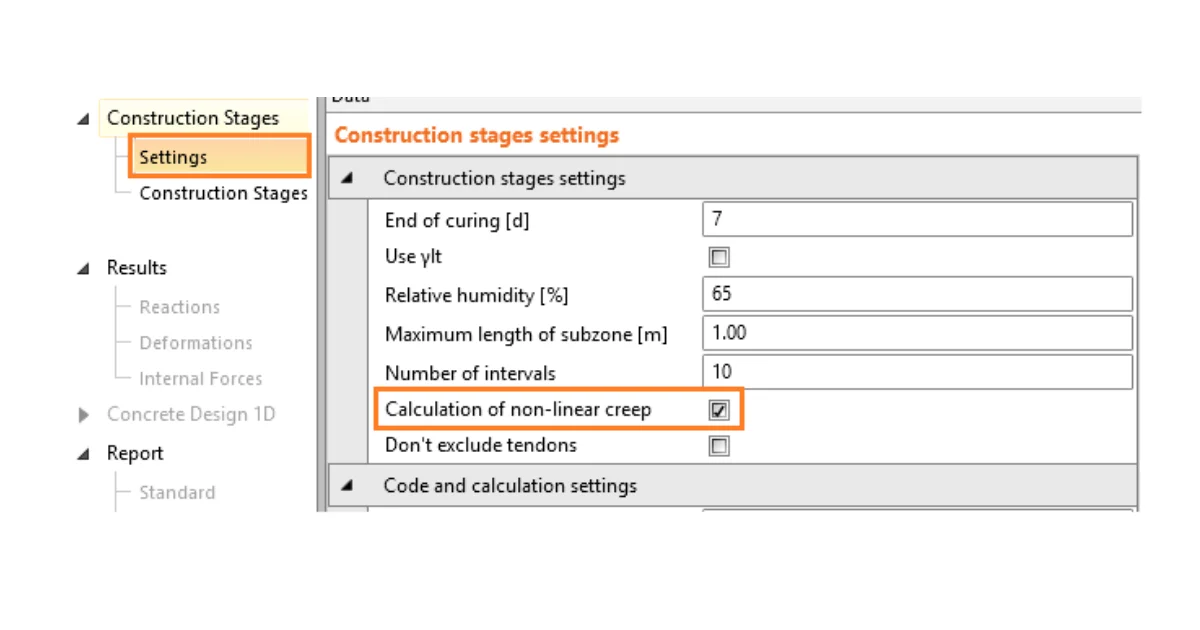
How to turn on the calculation of non-linear creep
  • Concrete
  • Beam
  • EN (Eurocode)
  • Prestressing losses
  • Reinforcement
  • ULS
  • SIA (Switzerland)
  • +7
  • Concrete
  • Beam
  • EN (Eurocode)
  • Prestressing losses
  • Reinforcement
  • ULS
  • SIA (Switzerland)

Knowledge base

Non-linear creep in Beam application

Read more
How the rinf and rsup coefficients are taken into account for SLS checks
  • Concrete
  • RCS
  • Beam
  • BIM link
  • EN (Eurocode)
  • +5
  • Concrete
  • RCS
  • Beam
  • BIM link
  • EN (Eurocode)

Knowledge base

How the rinf and rsup coefficients are taken into account for SLS checks

Read more
ULS results in RCS - Capacity N-M-M, Shear, Torsion, Interaction, Response N-M-M
  • Concrete
  • RCS
  • EN (Eurocode)
  • ULS
  • +4
  • Concrete
  • RCS
  • EN (Eurocode)
  • ULS

Knowledge base

ULS results in RCS - Capacity N-M-M, Shear, Torsion, Interaction, Response N-M-M

Read more
SLS results in RCS - Stress Limitation, Crack Width, Detailing
  • Concrete
  • RCS
  • EN (Eurocode)
  • SLS
  • +4
  • Concrete
  • RCS
  • EN (Eurocode)
  • SLS

Knowledge base

SLS results in RCS - Stress Limitation, Crack Width, Detailing

Read more