Idea Statica
  • Steel
  • Concrete
  • Support & Learning
  • Pricing
  • Company
  • Steel overview
  • Connection design
  • Member design
  • Parametric design
  • Steel case studies
  • Concrete overview
  • Walls and D-regions
  • Anchoring design
  • Concrete case studies
  • BIM Overview
  • Supported integrations
  • Checkbot
  • Viewer
  • APIs
  • Support Center
  • E-learning & certification
  • Blog
  • Downloads & Licensing
  • Plans
  • Free community tool
  • Enterprise customers
  • Students & educators
  • How much will you save?
  • About us
  • Contact
  • Research & development
  • Authorized resellers
  • Meet our customers
  • Career
  • Steel
    Steel overviewConnection designMember designParametric designSteel case studies
  • Concrete
    Concrete overviewWalls and D-regionsAnchoring designConcrete case studies
  • BIM OverviewSupported integrationsCheckbotViewerAPIs
  • Support & Learning
    Support CenterE-learning & certificationBlogDownloads & Licensing
  • Pricing
    PlansFree community toolEnterprise customersStudents & educatorsHow much will you save?
  • Company
    About usContactResearch & developmentAuthorized resellersMeet our customersCareer
14-Day Trial
14-Day Trial

Subscribe to our newsletter

Company

  • About us
  • Partners
  • Careers
  • Patent

Resources

  • Customer projects
  • Case studies
  • Connection Library
  • Verification books

Legal

  • EULA
  • Privacy policy
  • California Privacy
  • TOS Viewer
  • Licensing

Help

  • Contact
  • Quote request
  • Resellers
  • Downloads
FacebookInstagramLinkedInYouTube

© IDEA StatiCa 2009-2026

Trusted and used worldwide by engineers, fabricators & consultants.

Support CenterSample projectsPost-tensioned bridge beam
Post-tensioned bridge beam
ConcretePrestressed concreteSample projectsDetail 2DEN (Eurocode)

Post-tensioned bridge beam

May 10, 2025
This article is also available in
ENCZDEESFRITPTNLHUROKRPLTHTRVIZH

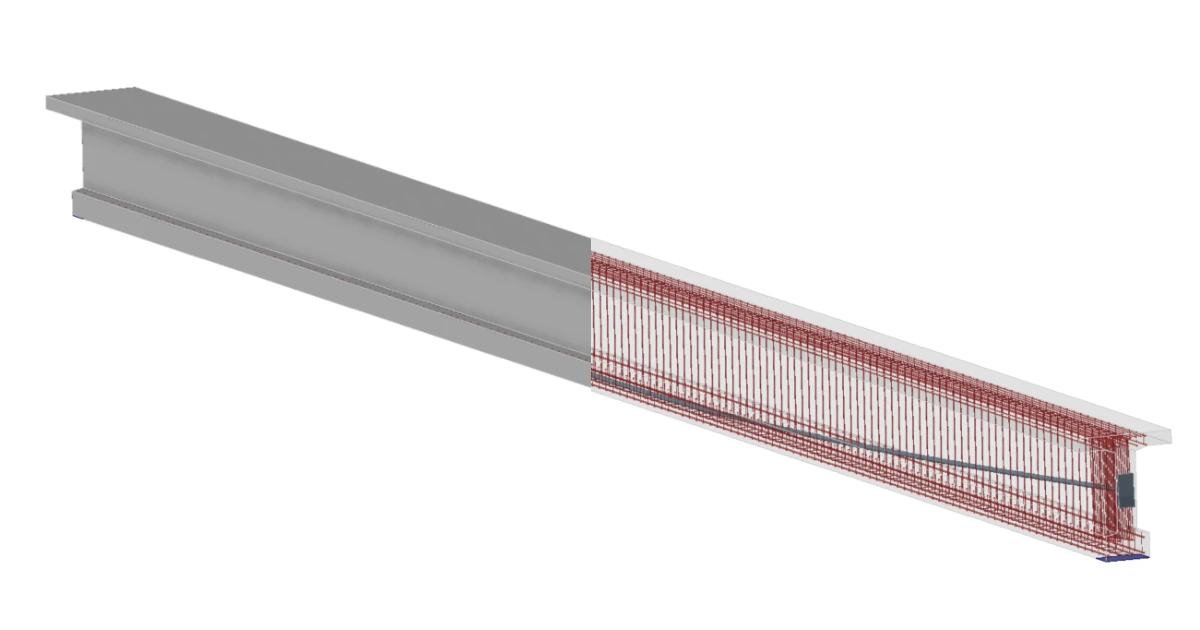
A post-tensioned bridge beam is a structural element strengthened by steel cables tensioned after concrete casting, enhancing load-bearing capacity.

  • Allows for longer bridge spans, reducing the number of support structures.
  • Enhanced durability and reduced cracking due to the prestressing of concrete.
  • Fewer materials are required for construction, and longer spans mean fewer piers and less overall cost.
  • Can accommodate variable loads and seismic movements better than traditional bridges.
  •  Slimmer, more elegant profiles due to the ability to span longer distances with fewer supports
Download