Idea Statica
  • Steel
  • Concrete
  • BIM & Workflows
  • Support & Learning
  • Pricing
  • Company
  • Steel overview
  • Connection design
  • Member design
  • Parametric design
  • Steel case studies
  • Concrete overview
  • Walls and D-regions
  • Anchoring design
  • Concrete case studies
  • BIM Overview
  • Supported integrations
  • Checkbot
  • Viewer
  • APIs
  • Support Center
  • E-learning & certification
  • Blog
  • Downloads & Licensing
  • Plans
  • Free community tool
  • Enterprise customers
  • Students & educators
  • How much will you save?
  • About us
  • Contact
  • Research & development
  • Authorized resellers
  • Meet our customers
  • Career
  • Steel
    Steel overviewConnection designMember designParametric designSteel case studies
  • Concrete
    Concrete overviewWalls and D-regionsAnchoring designConcrete case studies
  • BIM & Workflows
    BIM OverviewSupported integrationsCheckbotViewerAPIs
  • Support & Learning
    Support CenterE-learning & certificationBlogDownloads & Licensing
  • Pricing
    PlansFree community toolEnterprise customersStudents & educatorsHow much will you save?
  • Company
    About usContactResearch & developmentAuthorized resellersMeet our customersCareer
14-Day Trial
14-Day Trial
  • Steel
  • Concrete
  • BIM & Workflows
  • Support & Learning
  • Pricing
  • Company

Subscribe to our newsletter

Company

  • About us
  • Partners
  • Careers
  • Patent

Resources

  • Customer projects
  • Case studies
  • Connection Library
  • Verification books

Legal

  • EULA
  • Privacy policy
  • California Privacy
  • TOS Viewer
  • Licensing

Help

  • Contact
  • Quote request
  • Resellers
  • Downloads
FacebookInstagramLinkedInYouTube

© IDEA StatiCa 2009-2026

Trusted and used worldwide by engineers, fabricators & consultants.

Support CenterFAQWhat is the CBFEM?
What is the CBFEM - Component-based finite element method
SteelFAQConnectionAISC (USA)CBFEM

What is the CBFEM?

This article is also available in
ENCZDEESFRITPTNLHUROKRPLTHTRVIZH

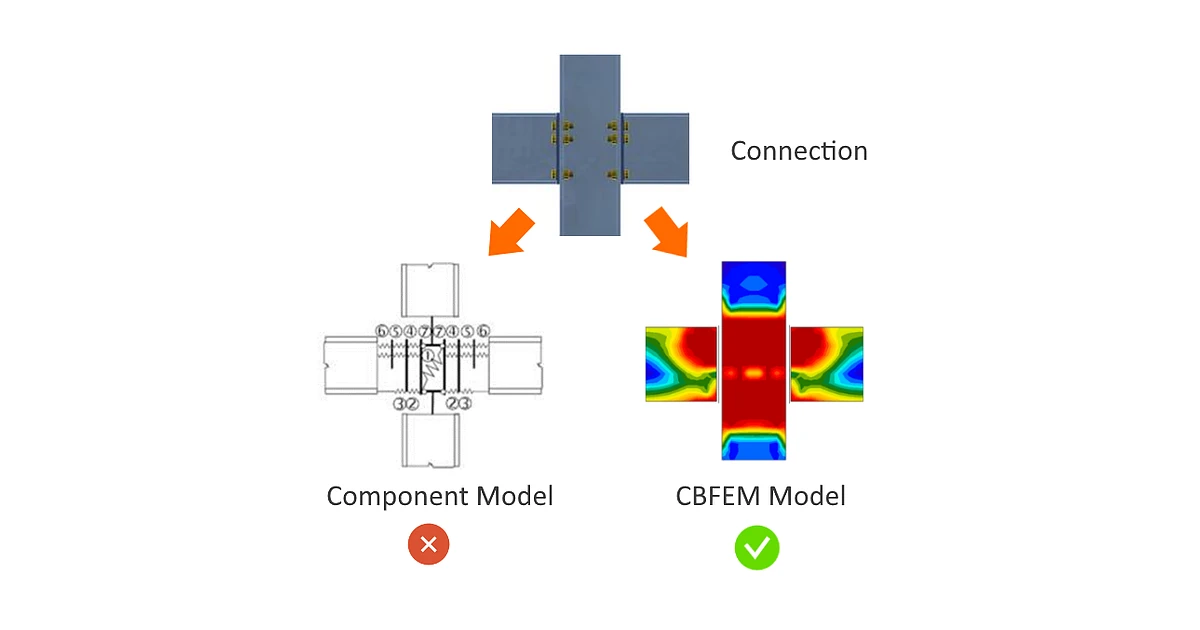
The CBFEM – Component-based finite element method. It’s a method for the design and code-check of steel joints, anchors and steel members. The steel joints can be created step by step using manufacturing operations, the model is automatically transferred to the analysis model by the CBFEM and the results according to the code are provided.

CBFEM is a synergy of the Component Method and FE analysis. This method is based on the idea that most of the verified and very useful parts of the Component Method should be kept. The weak point of the Component Method – its generality when analyzing stresses of individual components – was replaced by modeling and analysis using the Finite Element Method (FEA).

The CBFEM method provides clear information about the behavior of the joint or member. 

​The method is quick, efficient and compliant with the code.

Watch the webinar recording  explaining what is the CBFEM method and what is it based on: 

Find out more about CBFEM in our Theoretical background or on CBFEM.com.