About the project
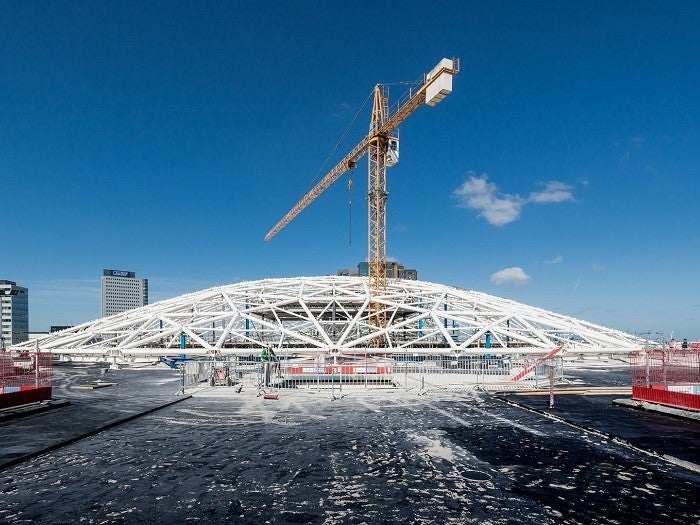
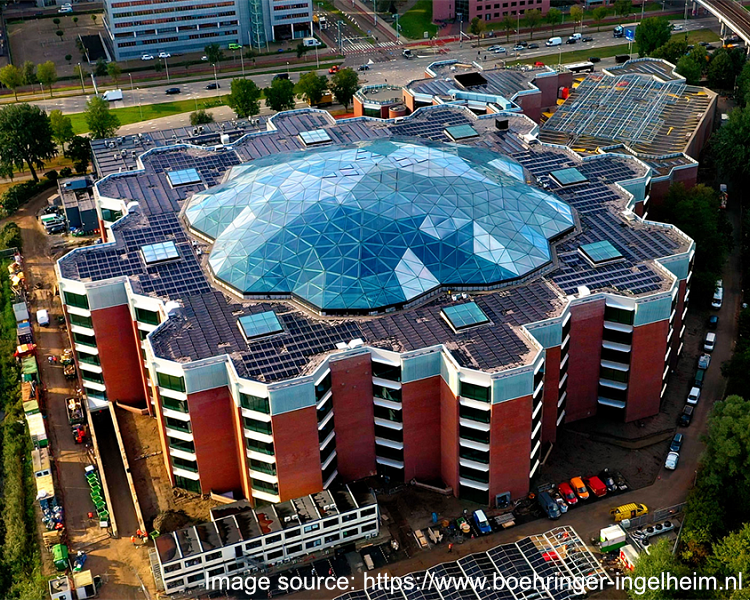
The EDGE redevelopment 60,000 m² project was led by the original architectural firm Architekten Cie, in which the inner garden was covered with a gigantic 4,400 m² domed roof spanning 76 m.
Consulting company G&S Bouw commissioned construction company ASK Romein to supply and assemble the gigantic supporting steel structure for the building’s remarkable glass dome.
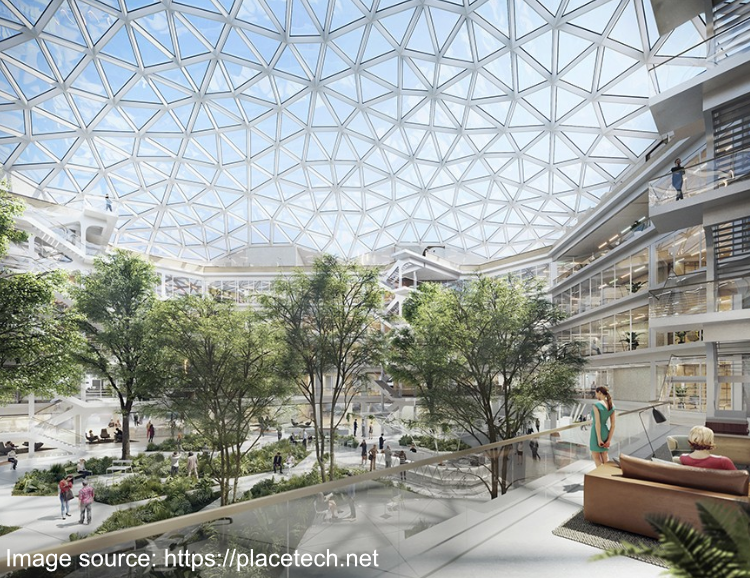
The dome, conceived by Architects Cie with SIDstudio, was designed to relate to and reflect the shape of the existing building while also bringing it up to date and making it future-proof.
With a height of 12 meters and spanning a massive 76 m, the dome’s octagonal main structure is composed of circular hollow sections with a diameter of 324 mm and a variable wall thickness that created a grid of triangles (with sides roughly 8.3 m in length). A secondary triangle structure (radians of the first) creates surfaces bridged by glass panels.
A tension ring balances the permanent horizontal forces of the dome and is connected to it at four locations to create a solid second load path.
The engineering, production, and erection of the steel structure of the dome took around one year.
The micro-geometric design of the dome is a nod to the original design by Oyevaar, and the building now boasts an impressive green atrium, open staircases, and bright office floors.
Engineering challenges
ASK Romein faced many challenges in delivering this beautiful and complex design.
One of the biggest was collecting and assimilating large amounts of data sheets (on the beams, nodes, profiles, forces, etc.) to turn it into a structure they would actually be able to build on-site.
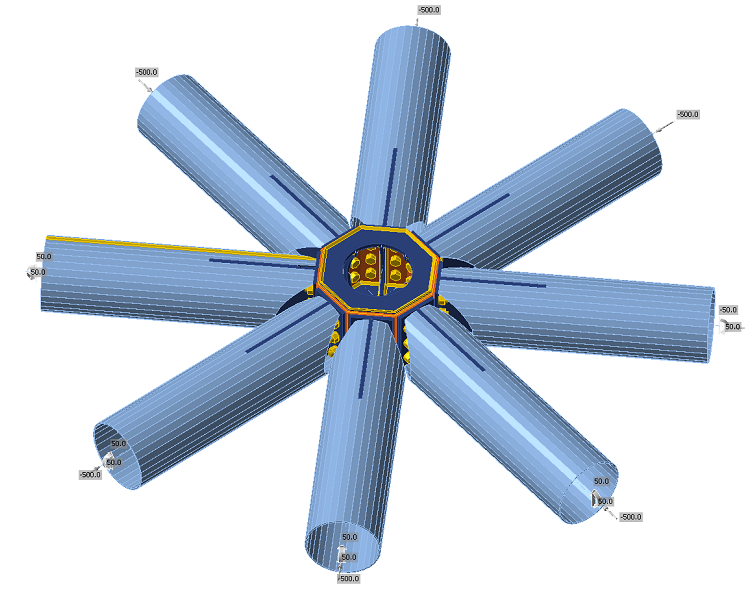
Engineers performed a practical analysis of the data and divided the main 3D model into three types of knots (e.g., where six beams or eight beams came together), and calculated roughly 20 different node types per knot with five decisive combinations.
For key segments of the construction, they decided to use a 'washing drum' connection (you can see on the picture below). Here, the node is fixed, and the repeating part and bars are connected via a head plate connection.